

Toy Story 4

Having grown up with the first two Toy Stories, I remember being over the moon when I caught on that Toy Story 3 was around the corner. The idea that I saw characters I knew from the VHS tapes I still have on me on the big screen, with a lot of other people relishing it in all its glory, left me glued to the screen with excitement.
And boy, did my family and I walk away utterly satisfied with the film. We looked back on it as one of the strongest Pixar movies ever made, especially under the Toy Story name. It was a tour de force of a sequel, and one worthy of the first two classic, masterful Toy Stories.
Fast forward to 2019, and at a time when sequels and remakes had become the norm under Disney, another movie had to come along under the Toy Story name. I was really hesitant about its potential; Toy Story 3 ended on such a strong and bittersweet note that anything more beyond what it already ended on would have felt like overkill and would have lessened the impact of Toy Story 3’s bittersweet ending.
Besides, what more can you do with Woody, Buzz, and the other characters after they and Andy parted ways? What more can you possibly do with them?
As for what we got? It fell a tad short of the first three’s artistic integrity, but Toy Story 4 snuck in some surprising and intriguing food for thought.
So what happened in this Toy Story now that the toys belonged to Bonnie?

First off, the toys enjoyed having Bonnie play with them, but she was constantly distracted by other things in her life. When the toys were not busy trying to grab Bonnie’s attention, they were accompanied by a new toy. However, it wasn’t given to Bonnie or bought for her; Bonnie made it at kindergarten orientation day. The toy in question was nothing more than a spork with arms, eyes, and legs named Forky. He’s basically a clueless toy who wondered what went on and how he came to be as Woody took care of him, knowing that he was not only Bonnie’s toy, but also her creation. So, there was another level of responsibility for Woody to uphold, both as the leader of the toys and even as a borderline parental figure for a toy like Forky.
However, in celebration of Bonnie’s day at kindergarten orientation, her parents surprised her with a road trip. To where? I couldn’t tell. But I did understand that it included a stop at an RV park. Mid-route, Forky tried to run free, but Woody, knowing that Bonnie would have been upset without Forky around, went after him. In doing so, Woody and Forky were separated from the other toys and tried to catch up to them and Bonnie while also running into an amusement park, not too far from the RV park.
While there, they ran into many different, unique toys near the fair and RV park, including Ducky and Bunny, a pair of stuffed animals who had been hanging in the balloon dart stand for a long time, waiting to be won. But their journey was upended by two toys, each of which got a different reaction from them.
One was a doll named Gabby Gabby, who lived in an antique store not far from the RV park or the amusement park and had some ideas for Woody. And the other one they ran into was, much to Woody’s surprise, a familiar face: Bo Peep, who became an independent toy. However, she was nothing like the Bo Peep we had last seen in Toy Story 2. This time around, she became adept at surviving the harshest aspects of the wilderness and used her wits and resources, and not just her cane and sheep, to fend for herself.
But during all those surprise meetings, run-ins, and dilemmas, Woody was still determined to return Forky to Bonnie. But now that Woody ran into the love of his life who he had lost, what would his devotions be like by then? To whom was he more devoted? And would Woody and Forky have made it back to Bonnie and their fellow toys without any further issues?

Clearly, there may not have been as many high-stakes dilemmas in this movie as there were in the first three films. And I think that’s why, even after looking back on this movie long after it came out, it made me look at this as the misfit of the Toy Story franchise. It just felt like another Toy Story in a franchise that supposedly did just fine with the three that came before. And I had no idea what more could have been done with the Toy Story franchise after it wrapped up so well, or so I thought.
Also, Toy Story 3 was such a powerful movie when it first came out that it became the third animated film to be nominated for Best Picture at the Oscars. So, the idea of a fourth Toy Story did not seem like a good idea because there’s no way it could top it, anyway.
Did this movie top it? Of course not. But that doesn’t mean Toy Story 4 had no aspects we should appreciate. It showed that, yes, there were still aspects of Toy Story that begged for more attention, even though we thought the third film wrapped up the series so strongly.
To start with, let’s pay attention to the themes of mortality and childhood devotion in this movie. Woody, Buzz, and the other toys got used to being played with by Bonnie rather than Andy. And as we’ve seen from the short films and even the TV specials that have aired between Toy Story 3 and this film, that’s proof of how well they got along under Bonnie’s ownership. But seeing Bonnie suddenly shift her attention away from the toys a little bit, when it was clear that a good amount of time had passed between when Andy dropped them off at the last film and when Bonnie made Forky, hinted at whatever shifting dependencies might have come about for Bonnie.
And frankly, this is where I believed the movie emphasized one aspect of Woody’s character that we had probably never seen since the first Toy Story: his more insecure side, the side of him who wanted to do anything to be a valued toy again. Whatever he tried to do, whether it was for his fellow toys, Andy, or Bonnie, there was a part of him that felt convinced that he was really doing this for himself, much like how he felt before and during Buzz’s arrival in the first Toy Story. Case in point, Woody prepped for Bonnie’s first day in pre-kindergarten by sneaking himself into her backpack to accompany her on her first day of pre-kindergarten. And when it seemed like Bonnie was off to a bit of a rough start, Woody discreetly threw out some supplies like crayons, fuzzy wire, googly eyes, and a spork, of all things, most of which came from the trash. It allowed Bonnie to use her imagination and create Forky, which is why, when Woody said she made a new friend, he meant that literally, that she literally made a new friend.
After kindergarten orientation, Woody did whatever he could to protect Forky, despite him not having been played with often by Bonnie. He knew that he had to keep Forky safe because he knew that Bonnie made him and that she adored him as the first toy she ever had and made ever, so it was Woody’s way of proving his loyalty to her.
Of course, because he threw in all the supplies Bonnie used to make her toy, it felt like Woody was trying to show his worth to Bonnie by expressing it through Forky. Most of the time, Woody and Forky’s friendship was like a relationship between a parent and a child who was curious about the world around them. Regardless, Forky’s comments did raise questions for himself and Woody as to how valuable they each were, not just to Bonnie, but altogether.
I found that part of their relationship touching because, as I said, Forky asked some of the most random questions a toy could ask besides just whether he’s trash or a toy. And in a way, it did hint at Woody’s humanity as his own toy, as an owner’s toy, who he was loyal to, and to whom he was trying to prove it. Was he trying to prove it to Bonnie? Or was he trying to prove it to his fellow toys? Or how about to himself?

It’s that kind of self-reevaluation that Woody had tapped into that I swear I recognized from only the first movie, and to see it resurface here in this movie seemed like a most opportune chance to revisit what we and even Woody thought had been put to bed before.
And nowhere did the questions of value in ownership become clearer than when Woody ran into Bo Peep.
Speaking of which, let’s talk about her. I was truly fascinated with exactly what kind of character Bo Peep grew to be in this film.
In the first two films, I remember her more as a genteel, soft-spoken lady who was clearly Woody’s love interest, wanted nothing more than for him to be okay and return home safely, and nothing more.
The idea of seeing Bo Peep back again after a long time was clearly a pleasant surprise, though I did question how Bo Peep came to be, as I compared how she was in this movie to how she was in the first two movies. After seeing so many movies and shows that highlight the importance of women proving themselves strong by resolving issues themselves and being tough-talking and aggressive rather than feminine and soft, it did give the wrong impression at first.
However, considering how long it’s been since we last saw her in Toy Story 2 and when we saw her in this movie, it can be argued that all those years of experience of hopping from one owner to the next until she finally became a ‘lost toy’ gave her a little bit of agency as well as some time to contemplate her own capabilities as a toy. As easy as it is to complain that they gave too much of a ‘tough girl’ makeover to someone like Bo Peep, I think all those years of experience made sense for her character in this film.
Besides, the nursery rhyme, ‘Little Bo-Peep’? Bo Peep didn’t just lose her sheep, she eventually set out to find them herself, for she ‘tried what she could, as a shepherdess should’. Well, the Bo Peep of Toy Story sure lived up to that potential in this film!
She was still the same conscientious Bo Peep as we’ve seen in the first two films, except her years of experience and evading something or someone gave her more alertness and proactivity, which helped make her a little more engaging than she had ever been in the first two films.
Except, to some extent, when she asked Rocky to lower the ramp for Woody and Buzz at the end of the first film. See where I was going with this?
Instead of starting in a video game or a fantasy, the film started with a flashback. Taking place shortly after Toy Story 2 and nine years before the last film, it revolved around Woody, who, along with his friends, still lived with Andy at the time, getting together with Bo Peep in Molly’s room to rescue a toy out in the driveway of Andy’s house. In this case, it would be RC, who was stuck in the gutter on a rainy day.
Yet, while they did successfully rescue RC, Bo Peep, along with her sheep and the lamp they came from, unfortunately ended up in a donation box to be handed off to another family.
Woody did the best he could to rescue Bo Peep next, but she might have taken the idea of being donated a little too well, like she knew this was gonna happen one way or another. Whether she prepared for this or not, it’s a little hard to put my finger on. But either way, I personally saw this as Bo Peep loving Woody too much to let him worry about her welfare, knowing that she was gonna be okay and that Woody would be, too.
Unless maybe she knew this was coming and didn’t think to tell Woody.
Anyway, let’s shift back gears and talk about Bo Peep and where she’s been in the nine years that she’s been away.

After seven years of being someone else’s toy, she was donated to the antique store, and after collecting dust for a while, she suddenly left the lamp, roamed about the antique store, and broke out to be her own woman, only she didn’t do it alone. Tagging along with her were her sheep, who were cutely named Billy, Goat, and Gruff, and a tiny policewoman, Officer Giggle McDimples, who I’ll elaborate on shortly.
I like the idea of characters who go away for a little while, only to come back not completely different, but with a more evident sense of experience than before.
I can tell from her accumulated experience that she became a lost toy, or, as it felt more like, a free toy, where she could have done her own thing and, above all, helped other toys in need, especially when it came to helping them find new owners. I also found it cute that she operated a remote-controlled car that she often disguised as a skunk to scare people off. That reminded me of when Buzz and the others crossed under the humans’ noses underneath the traffic cones in Toy Story 2.
Now, there were times when I felt like Bo Peep began to feel like the generic strong woman archetype we had seen everywhere in the late 2010s and early 2020s, where they showed no remorse, said what we expect them to say, or acted in ways that demonstrated their prowess while barely having enough personality to show for it. I’m not going to lie, at first, it did rub me the wrong way, as it might’ve almost everyone else, in terms of her new demeanor implying that girly means weak and tough means confident. But what I found interesting about that development in Bo Peep’s character, besides what she went through exactly, was that when she finally ran into the closest thing she ever had to a love interest in her life, it ignited an inner fire inside of her that began to help her evaluate who was very precious to who, whether it be Woody to her, Woody to Bonnie, or any toy to their owner, and know exactly what must be done to stay on the right track both for herself and for her friends. I found that part of her character to be Bo Peep at her best.
On top of that, her years of experience helped open Woody’s eyes a little to what value toys could have once they had no human child to rely on.
On a side note, two things.
One, when Bo Peep reunited with Buzz, she cutely called him her ‘moving buddy’. Yep, just like in the first film. Some people looked at this as infidelity to Woody, but I saw it more as old friends finally catching up.
And two, if you want to know exactly what Bo Peep went through before she reunited with Woody, check out the short film, Lamp Life, on Disney+. You might find it a short and sweet but neat look into Bo’s background.
When all is said and done, Bo’s real strength came from who she’s committed to, and not just her instincts as a free toy.

Now, I will say this about Gabby Gabby and her dummy henchmen of the antique store, the head of whom was named Benson. The first time they were seen, they highlighted an intimidation factor because Gabby said, in a calculated, somewhat cold voice, that she wanted Woody’s voice box. While everything else about her worked just fine, her voice box malfunctioned. Meanwhile, Woody’s voice box was much clearer, and Gabby thought it would be perfect for her.
Throughout most of the movie, I always thought that she was going to be a straight-up villain in this movie because of how desperate she was to have Woody’s voice box and keep Woody inside the antique store until she got what she wanted.
However, as more time went on, and as even Forky, who was left behind, began to understand her more, Gabby admitted that her dream was to belong to Harmony, the girl whose grandmother operated the Second Chance Antiques. Gabby was re-evaluated for her desperation not to get Woody’s voice box, but rather to be someone’s toy.
I thought this felt too reminiscent of what Stinky Pete went through in Toy Story 2, when he spent most of his life watching every other toy be sold off one by one. But as far as Gabby Gabby was concerned, she wasn’t just waiting to be sold; she was waiting to be sold to a specific girl she believed would be her dream owner.
But when certain situations came about that challenged how she looked at things, that’s when she and her henchmen rethought their life values and understood whether she was meant for anyone, or more specifically, who she would have been meant for if she was.
However, this led to plenty of misunderstandings, especially between Gabby, Woody, and Bo Peep. In one such struggle, it was bad enough when Woody lost his arm in Toy Story 2, but when I saw his voice box slowly coming out of his back, that was pretty terrifying to watch. Never mind that he became subject to a tug-of-war then; I didn’t expect to see Woody mutilated the way he was from the back.
Ultimately, after Woody caught on to Gabby Gabby’s dilemmas, he did give his voice box away to her, which wasn’t what I expected to see in Toy Story. Even after that, however, the idea of him giving it away felt almost like the toy equivalent of an organ transplant, where you give a part of yourself to someone else who was in desperate need of it. I found that part of the transfer most fascinating.
Speaking of worthiness as a toy, let’s hop over to the two girls whom Woody and Gabby valued.
Let’s start with Bonnie and how she treated Woody, for this reminded me a bit of how Daisy’s parents mistakenly caused the whole conflict of Toy Story 3 by accidentally leaving Daisy’s toys behind.

I’ve noticed some people complain about how Bonnie handled Woody after Andy entrusted her to look out for him, and say it made Bonnie look unworthy of holding on to her toys. But you must remember, Bonnie was a little nervous about her playing with the kids during kindergarten orientation, and it would be her first time getting a general taste of kindergarten. This reminded me of what Mr. Potato Head said in the first film about Woody:
He’s been Andy’s favorite since kindergarten.
Because Bonnie was much younger than Andy when he first got Woody, that convinced me Bonnie might have had a shorter attention span than Andy did. So, can you really fault her for being drawn to some of her toys more than others? I mean, who are we kidding? Andy would likely have done the same thing. And who knows? Maybe his sister, Molly, was like that when she was Bonnie’s age. Every kid is different, and they can be easily distracted by whatever caught their fancy.
I tended to look at Bonnie nearly the same way I looked at young Simba in The Lion King. Many people liked to rip her a new one because how irresponsible or foolish they found her to be. But because she’s only a few years old, we ought to rethink whether she was entirely to blame for whatever issues came about that concerned Woody or the others.
It might be the same thing with Harmony. She was just a regular girl, but she knew what could draw her attention. But it’s very clear that unfortunately, despite Gabby’s best wishes, Harmony turned out not to be the girl that was fit for her after all. And this is what kick-started the collective realization of the toys misjudging Gabby for what she wanted most.
Finally, Gabby saw a lost kid at the amusement park, and something in her told her that maybe this poor kid could use a companion to help her through the tough times. That’s when Gabby, with the voice box Woody lent her, was able to help her through the tough times and find her parents.
While Bonnie’s mother returned in the movie, with her being voiced once again by Lori Alan, Toy Story 4 would also introduce us to Bonnie’s father in this film. I can say that Bonnie’s father was a stressed-out man who did the best he could to make sure things went according to plan for himself, his wife, and their daughter. In addition, Jay Hernandez’s voice performance helped heighten the aggravation he felt every time things went sideways or in ways he didn’t anticipate.
Getting back to Forky, I really admire this character.
He was clearly an oddball because he always asked whether he was trash or a toy, and he often wondered whether he was either of those and nothing more. Now, we have seen characters mention whether toys were trash before, whether it’s Lotso in the last film or indirectly through Stinky Pete in Toy Story 2.
But the way Forky asked such questions sounded so innocent and curious that he came across more as a little child, albeit a highly articulate yet premature child.
Some of his questions and curiosities have sometimes come out of nowhere and were beside the point, but other times some of what he said tended to speak to a direct, inner part of you that’d leave you wondering exactly why things are what they are, why people are the way they are, and so on.
Compared to Olaf from Frozen, I found it pretty trippy to think of how Forky would have been a source of both good absurd comedy and engaging life lessons at the same time.
In fact, one of the most interesting parts of this movie centered on relying on your own conscience to do what’s right, as Woody did. Meanwhile, Buzz was still picking up on some things since the first film, like wondering what a conscience was, and he tried to explore them by pressing the buttons on his suit so he could hear himself say what his inner voice would tell him to do.

Whether it was contrived or undermined Buzz’s character, it barely mattered. The whole idea of consciences helped tap into a key psychological element apparent with the toys: trusting their own instincts, trusting their own owners, or finding out exactly what they’re meant for in life. Look at Buzz with his voice box, or Woody whenever he listened to his heart. And as for Bo Peep?
This was where Officer Giggle McDimples came in. I felt like this character may have been to Bo Peep what Jiminy Cricket was to Pinocchio. You know, the side character who had their own moments to shine while making for a hefty load of support and reasoning for whom they tagged along with? McDimples was no Jiminy Cricket, but she felt like that to me.
In terms of new characters, the most memorable one that I would pick was the Canadian stuntman named Duke Caboom. He used to belong to a boy named Ricardo, only to be tossed aside when he did not perform what the commercials said he could do. He always bemoaned that day of his life and wanted to prove himself worthy, as if he could make himself that to anyone, especially kids like Ricardo. Sometimes, his attempts to perform his stunts made for some good comedy and misery for him, but other times, when he actually pulled it off, it was much more exciting to see.
I especially love Keanu Reeves’ over-the-top voice performance. Whenever he voiced him, he sounded so overconfident and bombastic that I could not help but chuckle whenever Duke did his thing, even if he failed at whatever he tried to do right.
As for Bunny and Ducky, I thought they were somewhat decent side banter. Some of their imaginary moments about how to get even with who they considered their greatest foes did seem a little over the top in an imaginary sense. Sometimes, they were a little too obnoxious for me, but they nonetheless had their moments of cute comedic banter, like they were more or less like brothers at constant war with each other.
The returning characters, however, were not what I expected, all right.
Jessie, Rex, Trixie, Hamm, the Potato Heads, Slinky Dog, Bullseye, Dolly, Mr. Pricklepants, Buttercup, all of Bonnie’s toys? They all expressed themselves as normally as we would expect, despite not getting as much of a role in this movie as they did throughout the first three Toy Stories.

Every time a toy got into a predicament, Woody, Buzz, Jessie, and the other toys still in the RV tried to help by leaping out first. It became so repetitive, no matter which character did it, that even Dolly asked,
What is with everyone jumping out the window?
In a way, the toys getting the spotlight were mostly Woody, Bo Peep, and, to an extent, Buzz Lightyear, along with Forky, Ducky, Bunny, and Gabby Gabby. So, there was a little bit of a disconnect going on here compared to what I felt from the first three Toy Stories.
If all the toys had joined Woody to find Forky, then perhaps it would have had the potential to be as adventurous and terrific as the first three Toy Stories. But because it was mostly a personal conflict, I would say it kept a good chunk of what made the first three Toy Stories so great, but not enough to make it easily on par with them.
Then I have to say this.
The climax of the movie, where Buzz, Jessie, and the others tried to go to the carousel so the toys could find their way to reunite with them all, reminded me a great deal of what the toys did in Toy Story 2 with the Pizza Planet delivery truck. They clearly did not know how to drive the car, although they did a pretty nice job with the pizza truck. Regardless, their antics to hotwire, drive, or park an RV led to many pratfalls as they tried to reach Woody and the others. As a result, they took a lot of detours that continually drove Bonnie’s parents crazy until, finally, they stopped at the fairgrounds with at least three police cruisers blaring and hot on their tail. It just felt so exaggerated, if not overblown, that it felt a little wonky in its comedic execution, but not so much that it wasn’t funny; it still was.
Let’s talk about one of the most staggering parts of the movie: the animation. From the very first frame, I was completely thunderstruck in more ways than one by how far the animation went.
It’s a bit of a tradition going on with Toy Story. With each movie, it kept finding more techniques with which to embellish the toys and even the humans. In doing so, it only heightened the realism of the toys’ plasticity and the humans’ skin. And along the way, it continued to refine all the plastic, fabric, grass, soil, natural elements - everything that Pixar had been refining ever since the first Toy Story. And now look where the animation has gone with this film. This was practically on the same level as Moana and later Soul in terms of capturing a bit of borderline hyperrealism.
Of course, that’s one thing I do have to give credit to the movie for in terms of its animation. It did more than advance the hyperrealism of the animation. It applied it to some of the characters, as well as the otherwise cartoony physics, most effectively, like with RC at the beginning and with Bunny and Ducky whenever they got into their shenanigans or fantasies.


There’s even good enough animation for me to have fallen in love with the atmosphere. The forest scenery was lush and somewhat calming. The amusement park’s animation gave a sense of fun, carefree frivolity. I also liked how they applied the animation to the antique shop and painted it in a very suspicious light, with Gabby and her dummy henchman doing all the work. I found it impressive, considering the first three films had a generally bright atmosphere that felt like it only complemented the childlike wonder apparent in the first three Toy Story films.
I suppose that what I was really shocked by about this movie was that while the first three films had a sense of childlike wonder to it, the first two especially, and the third film with what was left of it before it began to wane under the knowledge that Andy’s all grown up and preparing to head off to college, Toy Story 4 felt like it was starting all over again with a new owner and with a whole new outlook on life. Maybe that explains why Toy Story 4 felt like a different beast from the first three movies.
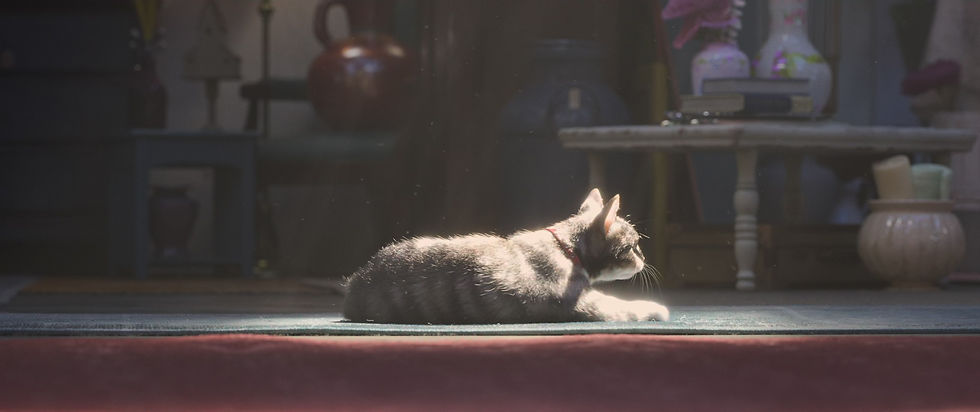
Look at the animation of this cat that munched down on that one poor toy. This felt like a completely different kind of animation and texture than what I’ve seen of Scud in the first film or even Buster in the last two Toy Stories. That’s how much animation has developed in Toy Story since the first film pioneered computer animation to visualize the movie.
It’s gotten to the point where if you watch all the Toy Story films sequentially, you can see just how well Toy Story as a franchise grew up, just like Andy, not just in terms of its animation, but also its themes, story, and capabilities of churning out some good material worthy of the Toy Story name.
Speaking of whom, I can tell a huge difference when it comes to Andy, too. He also appeared in the flashback, and compared to how I remembered him from the first two films, more visual polish was added to make him look more realistic. Personally, while he didn’t look half bad, I found it a bit jarring compared to how naturalistic he looked while on the brink of reaching young adulthood in the last film.
Compared to, say, Toy Story 2, where I felt the overall scope of the movie, here I felt more of its realism than its scale. But that’s one of the issues I had with the movie. Because the toys still retained their general personalities, their general movements, and things like that, especially from the little time that had passed ever since Andy gave his toys away to Bonnie, there did seem to be a bit of a disconnect between the realism of the outside world and the cartoony physics of the toys. Because the animation had clearly developed a great deal, I felt a little uncertain about what to make of the toys who came to life. At the same time, though, because Soul, whose animation would have been on the same level as Toy Story 4, used the same kind of animation on the humans as well as on their stubble and hair, while also maintaining the cartoony physics with the souls, I guess I should not be too surprised as far as Toy Story 4 is concerned.
The voice actors who came back to play their roles all gave their all in conveying the maturity, experience level, and dilemmas that each character had to go through.
Tom Hanks, and not just because of his age at the time, brought more comedic prowess and also more of an ‘experienced veteran’ vibe with Woody, for he had been Andy’s toy since he was a kid. So, we’re talking about eighteen years plus however long Woody was Bonnie’s toy. It helped distinguish him and his fellow toys from the others and showed how committed he was to putting others before himself and making them happy, especially after his rivalry with Buzz in the first film almost cost him a lot.
Tim Allen, when he wasn’t busy mastering his comedic essence with Buzz Lightyear’s character, continued to pay attention to the leadership and righteous qualities that Buzz gradually conveyed once he fully embraced his identity as a toy, and not just any toy, but that of Andy or Bonnie. I could tell just when things started to get a bit uncertain when Buzz, in his curiosity, repeated to himself phrases to remind himself of what ought to be done. And when it concerned his friendship with Woody, Tim Allen’s voice performance would have given you a clear idea of just how long Woody and Buzz have been best friends.
Annie Potts returned after a long, almost two-decade hiatus to do the voice again of Bo Peep. While the tough-girl mannerisms could get in the way, she still maintained the considerate, conscientious vibes of Bo Peep that I remembered from the first two movies. But her heightened aggression, when placed side by side with her personality, did help clue me into what experiences Bo Peep had in the years she’d spent as a free toy.
Christina Hendricks, who voiced Gabby Gabby, conveyed her with a suspicious-sounding demeanor. She had her old-fashioned charm, but the circumstances in which Gabby found herself cast her in a more unsatisfactory light, portraying her as a dangerous toy who would do anything to get anyone to help her fulfill her goals. But when her goals became clearer, she showed more vulnerability, redefining Gabby as a tragic character who was initially unnerving before sounding more lovesick.
Tony Hale, once again, was just the right actor to convey Forky’s confused sense of perception. He whipped out such random tidbits and questions about the nature of life that, more often than not, they went from being hilarious one minute to being thought-provoking the next.
The two actors who played Bunny and Ducky were each funny in their own way, and especially together. Keegan-Michael Key, who I had mentioned once upon a time as the narrator of the Green Eggs and Ham TV series, played Ducky. Jordan Peele played Bunny. And they both lent their characters enough comedic bravado to make them unwitting wisecrackers.
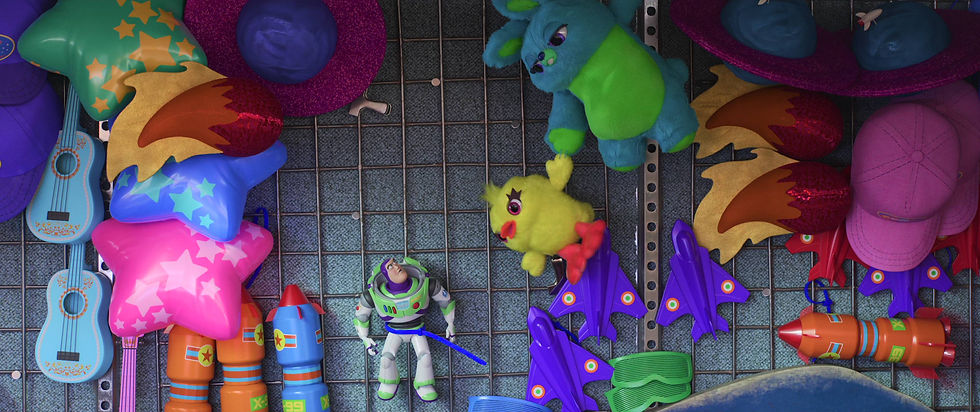
They’re a little bit like Pixar’s own Timon and Pumbaa. They may not have contributed much to the movie, and sometimes they felt tonally inconsistent. But whenever they got their chance to shine, they left behind some genuine humor and memorable moments together.
Randy Newman’s music continued to master the general influxes, themes, motifs, and instinctive melodic notes that helped define the music he composed for the Toy Story franchise altogether. Say what you will about Randy Newman, but I can safely say that the work he provided for the Toy Story franchise might be his finest yet.
Even his songs from this movie touched on what the characters went through. ‘I Can’t Let You Throw Yourself Away’ was an upbeat, catchy, cute song that reflected Woody’s instincts to protect Forky by any means necessary. In any other situation, this could be interpreted as how other people would feel when trying to talk people out of either depression or anything worse. The innate cheerfulness from Newman’s voice, combined with some of the choral vocals, helped a great deal, too.
And the song ‘The Ballad of the Lonesome Cowboy’ provided a lot of poignancy and contemplative moments that lurked beneath our noses throughout Toy Story 4. After all, this song was mostly about what Woody would likely have experienced throughout his life. This song had two covers, one by Randy Newman and one by country singer Chris Stapleton, and they each achieved a different effect for the general story of the song. Stapleton honed elements of what Woody dealt with in a general sense, while Newman touched upon Woody’s issues more innately.
In some cases, however, Toy Story 4 ended up being the final project for some of the people involved.
This was unfortunately the last movie that starred Don Rickles as Mr. Potato Head before he passed away in 2017, just a couple of years before this film came out. It was said that Pixar used spare recordings of Rickles’ voice performances as Mr. Potato Head to voice him in this film. And while she died in 2022, this would be the last time Estelle Harris played Mrs. Potato Head. And for what they each brought to the film, they still brought the Potato Heads to life with terrific comedic instincts.
Another bittersweet angle to evaluate this with was that this was the last Pixar movie overseen by one of the original artists behind Pixar’s launch, John Lasseter. But that happened for different reasons.
In the late 2010s, much like Harvey Weinstein and Bill Cosby earlier, allegations began to circulate about John Lasseter’s sex scandals, thus terminating his long-standing position at Disney and Pixar. John Lasseter would eventually have another chance with Skydance Animation, where he made films like Luck and Spellbound. Of course, even if John Lasseter is still out and about in the animation business, though not on the same level as he was under Pixar, none of his films came close to matching the iconic status and nature of the Pixar films he helped get off the ground.
But let’s get to the ending of this movie, and I’m not going to lie, it was pretty bittersweet.
After Buzz, Jessie, and the toys all got the family RV into the fairgrounds, they were about to finally get back into the RV when Woody had to say goodbye to Bo Peep. But the next thing I knew, Buzz reassured Woody that Bonnie would be okay. That is to say, Bonnie can take care of herself, while Woody should go, be his own toy, and be with Bo Peep. It was already tragic enough when all the toys had to say goodbye to Andy at the end of the last film, but here, the toys were having to say goodbye to Woody next.

Obviously, I felt a lot of conflicting feelings about this movie. But that’s one thing I have to admire about Toy Story 4. Even I began to acknowledge that the Toy Story franchise was beginning to accept change and grow with it, as I’m sure Woody, Bo Peep, and even Forky did.
As for how this came about, that leads us into not only my favorite part of the movie, but also what I believe gave this movie the depth that made the first three Toy Stories such masterpieces.
It introduced many intriguing concepts worth pondering, most notably its emphasis on existentialism. And I do mean, emphasis. This was prevalent in Toy Story since Toy Story 2, but this movie, by comparison, was where I believe it dove the deepest into such mindsets.
It asked many engaging questions about free will, reliance on other people, self-worth, longevity, independence – all the qualities that make you feel like you were the most free you’ve ever felt in your life, like you finally got to live your life to the fullest. There’s also the test of commitment that you would have to other people, whether it’s to others or yourself. I have to give the film credit for that, because even though it’s toys grappling with these issues, they’re engaging, deep, and relatable to anyone listening.
Of course, even the first Toy Story, that one was all about Woody and Buzz’s relationship as they went from bitter enemies to the best of friends as they tried to break out of Sid’s house. So what provided most of an internal dilemma for the characters in this film?
Even Woody told Buzz in the RV that things were different with Andy than they were with Bonnie, especially since Buzz didn’t enter Woody or Andy’s life until he was about eight or nine years old and they were moving away. It gave Woody, Buzz, and even Bo Peep an engaging way to explore their insecurities, and it raised a lot of questions worth asking, whether in the context of Toy Story or in any given situation.
Last but not least, there’s one post-credits scene where it hopped forward another year or two, where Jessie, now the leader of the toys after Woody promoted her as the sheriff, said that Bonnie just started first grade. In which case, she introduced a new friend that she made. Again, one that she literally made. This time, it was a female spork toy, and she stole Forky’s heart as they grew closer to each other. It was touching at first when the female spork said, “Trash?” And Forky said, “No, we’re toys. We’re all toys.” That told me how much Forky had grown and matured. But then she asked, “How are we alive?” All Forky could say was, “I don’t know.”
That was actually a good question. How could the toys be alive? But maybe in the case of the movies, that’s one of those questions that don’t need to be answered, because there are some questions we like or even need to ask but ultimately don’t need the answers to. That also tied into the movie’s existentialist themes.

Because I was so used to what an emotional and powerful bow tie of an ending Toy Story 3 brought to the franchise, I was so used to that being the true final movie of Toy Story as a franchise that when I revisited Toy Story 4, I was prepared to either see this as an evident step down from the first three or not to expect myself to like a thing about it even though I have watched it once in theaters.
On the one hand, this was still the most flawed of the Toy Stories. But on the other hand, it wasn’t so flawed that it kept it from being a terrific film that steered the franchise’s narrative in an engaging new direction. This was one of those movies where the positives outweighed the negatives.
Some of the humor can be a little obnoxious, and the dilemmas and long-lasting consequences in this movie threw in a confusing array of choices and moral dilemmas. However, the voice acting was still top-notch. Bo Peep’s character development was surprisingly welcome and natural. The music by Randy Newman continued to make a name for itself on Toy Story’s behalf. And the animation, what can I say? It just kept getting better and better.
Just because the direction it took was different from what I was used to in the first three Toy Stories doesn’t mean it was automatically bad. It just felt more foreign to me than what I was used to. And that’s probably why this movie was the riskiest movie I’ve ever seen under the Toy Story name as well. It literally lunged its way into uncharted terrain, most of it because of the toys now being under Bonnie’s ownership rather than Andy’s ownership. And for what it had going for it, there were many neat detours going on that amounted to some neat explorations, compelling character revelations, unexpected character reunions, engaging character dynamics, fascinating questions to ponder over, and unprecedented turns of events that still maintained what the first three Toy Stories did well in propelling the characters into new directions while still holding on to what made them so special. It just had to go through some stylistic clashes to get there.
Time to pick up your toys again, because you may find this venture full of surprises.
My Rating
A



Comments