

Star City: Season 1 – Adults Only

I still remember this like it was yesterday.
It was back in 2020 when I reviewed For All Mankind’s first season, and I appreciated its inventive storyline: what if the Soviets landed on the Moon first instead of the Americans? I remember saying that I was intrigued by the American side of the conflict, but I was left wondering what would have happened on the Soviet side. I looked at it as a missed opportunity for For All Mankind not to address the Soviet side of the whole debacle. How would the Soviet Union have reacted to the idea of landing the first man on the Moon, not to mention the first woman on the Moon, as we would see in For All Mankind?
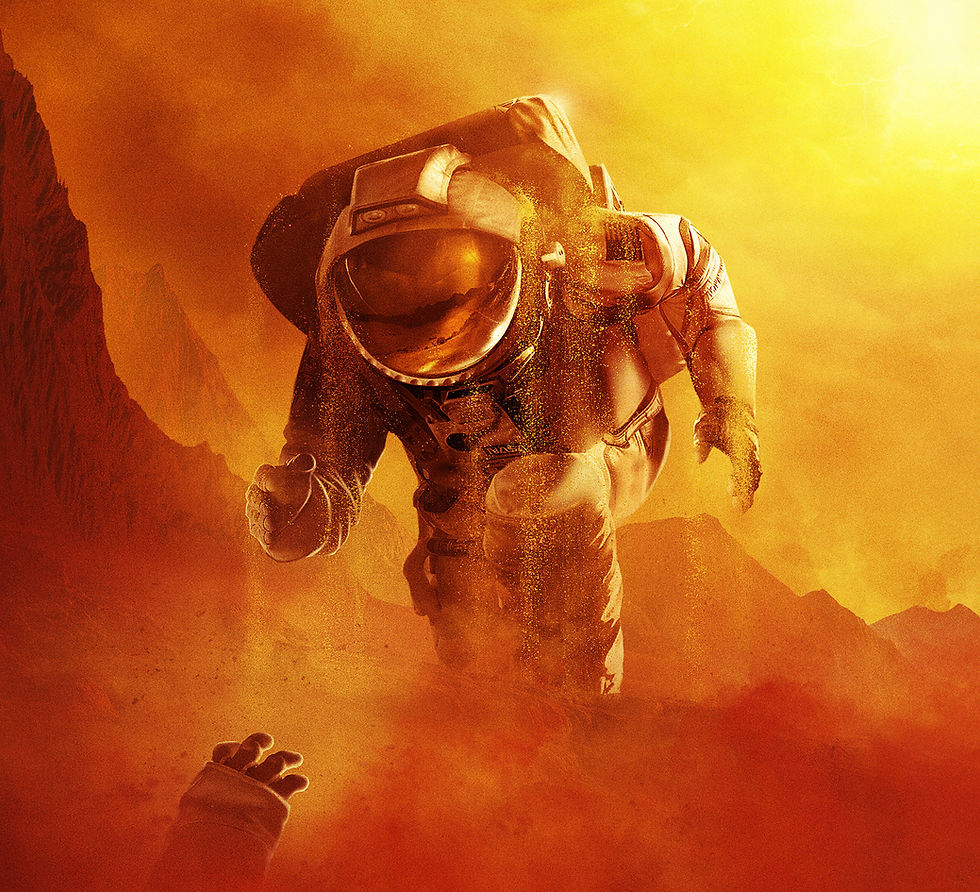
Around the same time For All Mankind’s fifth season was announced, a spin-off series was also announced: Star City. Named after the real-life Star City in Moscow Oblast, Star City functioned as the primary training grounds for up-and-coming cosmonauts in the Soviet Union.
And this show, also titled Star City, was For All Mankind’s attempt to shed light on the Soviet side of the story after it had already done a good job covering it from the American side.
So after finishing the entire first season, what do I think?
I would say it did a terrific job of what it set out to do, but a few stumbles kept it from completely winning me over.
Let’s start at the beginning.

On one side, a young woman, Irina Morozova, worked in Star City’s surveillance department as a typist. Her job was to monitor underhanded activities and transcribe recorded conversations she picked up from their targets. Her advisor in the operation was Lyudmilla Raskova, head of Star City’s KGB branch. As Irina learned the hard way, their long-term job was to infiltrate any Soviet personnel who may have been suspected of any activities against the country, as they so demonstrated in the form of the incarceration and brutal torture of a cosmonaut named Yana Akhmatova. She reportedly had American intel with whom she communicated; that way, she would give them intel as she prepped with her fellow cosmonauts for their first journey to the Moon.
As soon as Yana was pressured into telling them the whole story, Irina believed her, as did Lyudmilla, but she still urged Irina to put her out of her misery as a precaution. This is the kind of show we’re in for.
The rest of the show followed Irina as she did everything she could to keep up with her job while catching wind of off-putting activities, including those of fellow cosmonaut Valya Mironov and his wife, Tanya Mironova, who tutored her young daughter in piano music. When Irina began to notice things between her and her husband that seemed off, she looked into it to see what was going on. Even if she did, she would have to figure out what it meant for her and where she stood in Soviet society.
Other times, the show delved into the inner workings of Star City, mostly through the operations of a coordinated space team led by chief designer Sergei Korolev. It was his idea to throw Yana out of the space facility as he replaced her with another up-and-coming cosmonaut who he viewed as a good fit for the space mission: a young woman and former politician named Anastasia Belikova, who, as we may remember from the end of For All Mankind’s ‘He Built the Saturn V’, would become the first woman to land on the Moon. After completing her mission, she was awestruck by the beauty of the lunar surface.
Of course, for all of Star City’s travels to the Moon, Korolev had one objective in mind, which he thought could further revolutionize the Soviet Union’s accomplishments with space travel. His idea of pushing the envelope was to have his crew be the first to land on Venus, which I questioned because of how uninhabitable Venus could be in ways beyond its hot surface.
Meanwhile, fellow cosmonaut Sasha Polivanov was asked to marry Anastasia Belikov and take her as his wife to build public morale. Meanwhile, Anastasia reflected on what she accomplished and witnessed on the Moon and how she felt the freest she’d ever been, all while navigating the publicity thrust into her lap as the first woman to ever land on the Moon. By then, it had become more of a burden than an honor.
Meanwhile, as Korolev got everything underway for his ambitious mission to Venus, along with engineer Sergei Nikulov, whom we would recognize as collaborating with Margo Madison throughout For All Mankind, a small device snuck into Star City’s next rocket, Luna 17, and left one of the cosmonauts for dead. As they got to the bottom of where this device could come from and how it made its way into the Soviet Union, it would jump-start a chain reaction of conflicts that would determine what possible capabilities the Soviet Union would have in its potential for further space exploration after already making history with its own Moon landing.
Would they work through their conflicts with as little complication and bloodshed as possible? Or would the Soviet Union’s cockiness and paranoia interfere with whatever progress they could have in space exploration or even as a nation?

It was a lot more complicated than that, but – spoiler alert – it likely leaned toward the latter. Let me explain what was going on throughout this show.
Ever since I started For All Mankind, it did such a good job of showcasing the American side that I was genuinely curious to see what would happen on the Soviet side. At first, I thought For All Mankind could have used a little more exposure on that front to achieve that. The closest it ever came was not until its fourth season, when it showed exactly what Margo had to go through when she found refuge there from the 1990s into the 2000s.
Well, finally, Star City gave us a deep, in-depth look at how the Soviet Union reacted after being the first to land people on the Moon.
But honestly, what I saw in this series almost makes me sorry I asked.
Almost.
For starters, let’s talk about the acting.
For a long time, I forgot Irina was highly knowledgeable about Soviet activities throughout For All Mankind. And as I heard her relay to Margo, she knew exactly what to watch out for, what to have Margo watch out for, and why Margo must do what she would tell her as a means to get them a Soviet advantage.
But in this show? It may have had more to do with how she was in the late ’60s and early ’70s than later in the For All Mankind timeline, but Agnes O’Casey conveyed her with such an innocent essence and such a fierce inner drive that I ended up feeling concerned for her. But that was impressive, because in the first few episodes I saw her, she tried to work her way up in the surveillance department and made me wonder if she would have taken umbrage at the more unscrupulous deeds being pulled off, especially by Lyudmilla. But the longer she did her job, the more her proactive nature made her feel like she was doing what she could for her own safety, for her daughter’s safety – especially since her husband left them both a while back – and also for the safety of the rest of her country. I felt her urges to prove herself as the best because she looked like such a committed young lady, especially as a mother, who ultimately ended up serving what was technically an overzealous, over-paranoid force for the Soviet Union. It got to the point where she began showing subtleties and behavioral patterns that conflicted with who she started out as, which reminded me this was the same Irina who would eventually try to run her own plots with Margo in For All Mankind. I was really bummed out about it because that told me that yes, sooner or later she would eventually succumb to the pressures of the Soviet Union and be just another pawn in the country’s plot.
I remember Solly McLeod well for conveying Sasha with a proud yet arrogant personality. But he ultimately gave him more decency, which fit his more innocent demeanor, especially as a young cosmonaut trying to make the Soviet Union proud. On top of that, while his frustrations as an up-and-coming cosmonaut were obvious and admirable, I found him most fascinating in his commitment to Anastasia. The more I looked into him and his performance, I looked at Sasha thinking that he was doing his best to make a good example as a cosmonaut of the Soviet Union while also trying to balance it out with his duties to at least be a good husband to Anastasia, regardless of what political benefits that could arrange for them. As he continued to uphold his end of the bargain, taking part in the more covert and uncertain space missions arranged by Korolev, he became a sympathetic figure because McLeod’s portrayal was that well-rounded.
But that’s nothing compared to the sympathy Alice Englert aroused as Anastasia. She seemed like a humble young lady whose character was thrust into one of the biggest organizations of the Soviet Union, of which she barely had any knowledge, and in so doing, was given the honor to pull off some remarkable feats, only to be held back by how she was expected to achieve that for her fellow country. Because of this and the sheer awe she felt when she settled on the lunar surface, it only haunted her with insecurities and uncertainties as to what worth all this free publicity would give her when it became clear that she wanted nothing more than to fly back to the Moon and re-experience her time on the Moon. Englert captured this well through her timidity, sense of conflict, and unwillingness to take what the Soviet Union handed Anastasia, because they expected her to be the public face of the woman who reached the Moon for the Soviet Union instead of a competent cosmonaut. She captured her character’s sympathetic qualities well and left me impressed with what she could achieve with her.
Anna Maxwell Martin, who played Lyudmilla? I wasn’t sure what to make of it. Sure, she conveyed the high-and-mighty antics that were likely the norm among many Soviet officials back then, and she wasn’t too shabby in bringing them to life through Lyudmilla. But I felt a slight monotony in her performance, which made me see her more as an obstacle than a character, and that threw me off a little. Personally, I could tell she tried to give her performance a little more leeway and round out her character, and for the most part, it worked. But I felt like her performance almost felt as restricted as Anastasia was.

And much like Agnes O’Casey with Irina, Josef Davies had the privilege of playing Sergei Nikulov after I was acquainted with his character from For All Mankind. And for what Davies lent to his character, for all of Sergei’s expertise necessary to pinpoint the exact technical terms and mathematical equations with which to help their space shuttles perform their job for the Soviet Union, I could sense a level of innocence he conveyed to Sergei that may have hinted at where he stood in the Soviet Union, especially compared to how we would have seen later on in For All Mankind. Whether he was doing that for Korolev or if he tried to do so as his way of proving his worth in Star City, it’s obvious Davies conveyed Sergei in terms of where he stood in the late ’60s, early ’70s, and what he was about to be in for once the Soviet Union’s force felt more imminent.
Adam Nagaitis also conveyed a lot of varied instincts, but I found the way he played Valya quite fascinating. He started as an arrogant guy who tried to present himself as a worthy cosmonaut, but he wasn’t without reservations about some of the technical terms that would be put in place for his next missions in space. For example, he wasn’t on board with Anastasia joining him on the space mission instead of Yana, and he was clearly against the idea of Lakshmi Chadha, an Indian woman, joining him and Sasha on their mission to Venus. Plus, as Tanya’s husband, he’s also revealed to be quite feisty and sometimes overbearing. But aside from that, he proved his worth as a cosmonaut by keeping a professional posture whenever he did his thing, whether in private or in public, until, after a while, I began to look at him more supportively. That’s why it became all the more shocking just how good he was at his job when more and more bits of evidence proved that he was unquestionably an American mole. Thus, his involvement would jump-start revelations and consequences that would test the Soviet Union’s willingness to either continue its space exploration or prioritize security over its well-being as a nation.
I’m also a fan of Rhys Ifans as the chief designer, Sergei Korolev. When I first saw him, I looked at him with slight uncertainty and thought he was going to be one of those officials with a low tolerance for other people. But as the series went on, he showed more concern for his colleagues, especially when they questioned their stance on the next space mission. Eventually, Ifan portrayed him as a visionary who believed his next step in space travel would be worthy for the Soviet Union, especially if it meant getting there before America did. He even remained firm in his drive as his attempts to make it possible for the Soviet Union were met with hostility, especially from Lyudmilla as the evidence of Valya’s role as an American mole became unearthed more.
All these actors did an engaging job of cluing us into the Soviet Union’s general lifestyle and what progress or harm could come about from its handling of them as the first nation to land on the Moon. But as you can tell from my thoughts on Anna Maxwell Martin’s performance, I found it an almost dead-on round of acting, and still cohesive enough to make a hefty first impression.

As for the characters themselves, how did they bode for the show?
Hopping back to Irina, I knew that this would be the same character who would consult with Margo about what to watch out for in terms of Soviet activities. But I found her one of the most genuinely sympathetic characters in the show, since she was an up-and-coming young lady who tried to prove her worth to the Soviet Union as a covert typist who would pick up on conversations as she transcribed them and bits and pieces of what felt off in service to her nation. But because she did what she did as a mother, it also made me concerned as to where her loyalties lay, especially after witnessing Lyudmilla execute Yana simply for her American ties. That made me wonder, based on what I remembered of her in For All Mankind, whether she would have had any gripes about the Soviet Union’s functionality or its spy tactics, and whether she would have revolted and tried to make an example of them. But as she got used to it, it’s obvious she tried to maintain her priorities in the field, both as a mother and in service to the Soviet Union. So, some of her actions, though very engaging to watch, also reminded me of her instincts and convictions once she ultimately collaborated with Margo in For All Mankind.
Chief designer Sergei Korolev felt like he had a lot on his shoulders as Star City’s chief designer, but I knew one of the most memorable aspects of this character, as I let it sit, was his vision for Soviet space exploration. No matter what he did, he always brainstormed what would be best for the Soviet Union and its role in space travel, especially after already achieving that with the moon landing. But it became apparent that his greater ambitions for Star City, and by extension, the Soviet Union, were operated more in secret. That told me that whatever ideas he had for the Soviet Union may have conflicted with what was expected of him in his role in Star City, whether they had anything to do with American spy activity or not. It was interesting to assess Korolev this way, looking at how his visions for space travel came about while also highlighting what he was in for when some of them didn’t quite go according to plan, as we remember from For All Mankind.
I’ll explain how that came to be as soon as I get to it.
Anastasia, the first woman to land on the Moon, and who we’ve seen at the end of For All Mankind’s ‘He Built the Saturn V’, had a hell of a reputation to uphold because of what she achieved and was regrettably mandated to by the Soviet Union, rather than what she could perform because of her achievements. At the beginning of the show, she had little experience in the space department before being put in Yana’s place after word got out about her entanglements with America. Once Anastasia was thrust into that position and given a chance to take in the Moon in all its glory, it tested her willingness to tolerate whatever publicity, questions, and press were thrust upon her, especially with the idea of taking in fellow Star City coworker Sasha as her husband. And again, that was brought about through political means. While it was obvious that Anastasia began to develop feelings for Sasha as her husband after spending more time with him, it became even clearer that she never stopped pondering what her true purpose in life was and what she wanted most. As her reputation as the first woman to land on the Moon and her life on Earth challenged her more, that’s when she began to closely assess what and who truly mattered to her in her life, until she finally was able to pick up the pace and attempt to prove herself the way she always wanted to prove herself to everyone else.

Sasha may not have had much going for him as a character, but I remember how cocky he started out as and how confident he was in making the Soviet Union proud before he went into space. But the longer he complied with Soviet expectations, especially as he took Anastasia as his wife and worked with Korolev on their mission to Venus, the more it began to test his worth in terms of what and who truly mattered in his life as well, much like Anastasia did after gradually viewing him as her husband. In a way, Sasha, despite his pigheadedness, was portrayed with the same sympathetic qualities as Anastasia.
Sergei Nikulov may not have had much going for him, either. Regardless, his skills as an engineer and his expertise in math and science were enough to impress me with what he could detect in spatial and seismic activity, and what he could pinpoint before anyone else would end up worse off than where they started.
As for Lyudmilla, while I thought the performance needed a little wiggle room, there were some things I thought about her that needed a little wiggle room, too. But let me start with this.
She started as just a domineering official who wanted to maintain security for the Soviet Union and tasked anyone working under her wing to pay close attention to what went on either in the privacy of someone else’s home or near them so they’d know whether what and who they dealt with would hint at a possible infiltration of Soviet soil. At times, her actions led to her being questioned by her superiors in the Soviet Union, and I saw it as her trying to prove her worth to the Soviet Union as things began to shift in ways she and her superiors may not have seen coming.
She engaged this way for most of the season, until a certain event came along and shook things up. That, I will also talk about when I get around to it.
At first, I was not very keen on Valya because of how brash he was, not just to Anastasia, but also to his wife, whom he chided for constantly playing her piano music, specifically Guess Who’s ‘Undun’. Because of his arrogance, I looked at him, uncertain of what to make of him and his time in Star City. However, as more clues were dug up about what he tried to do to Star City’s space program, and not just with it, it painted him in a more multifaceted, almost terrifying light. Once I knew exactly what transpired and how much of a role he had in it, that would clue me in as to what he really had in mind and why everyone, and not just Lyudmilla, was so on alert with him.
As for his wife, Tanya, I remember her also having her share of sympathy, just like Anastasia. Part of it was because Valya mistreated her at times and because she was Irina’s daughter’s piano teacher. However, what made her engaging, besides what she attempted to work out with Valya as his wife, was that she was unknowingly entangled in a plot that would only reveal just what kind of human being Valya was and how much in the world of hurt she was about to be because of such affiliations and marital connections. As this went on, it left me on the edge of my seat and, like Irina when she found out the truth, uncertain what to make of her or her motivations as her husband’s motivations became more apparent.
Now, I don’t know how much of this correlated with the Star City of our universe, but I have to give props to the general set designs of Star City and of Soviet Moscow. It carried all the familiar Russiana, but also the distinct features that embodied the late ’60s and early ’70s. It maintained what was conveyed most accurately of it from the 1960s before the USA landed Neil Armstrong and Buzz Aldrin on the Moon and took it in new directions as it adjusted to all the different little tweaks and changes in the social and historical phenomena that would steer Star City and For All Mankind away from how we’re used to the Space Race in terms of its historical climax. I could feel it all over the Yuri Gagarin Cosmonaut Training Center. I could feel it all over the characters’ homes. I could feel it throughout the Moscow streets and even in the Soviet forests. It felt so exotic and so like the Soviet Union of the mid-20th century that it only helped hone the general authenticity of how the Soviet Union would have been like had things gone differently in their favor.
Either that, or I was more drawn into the ethics and engineering behind space travel as the Soviets accomplished it. I was so used to the Johnson Space Center in Houston and how we accomplished space travel from there that I haven’t looked into what other methods of space travel our competition made possible. And Star City, despite taking an alternate-history approach like For All Mankind, still gave us an in-depth look at what led to what the Soviets accomplished in space travel and its technology. Even though the show didn’t mention the launch of Sputnik, I was still intrigued by what it did clue me into about Soviet history.

SPOILER ALERT
That said, however, let me get to what I was building up to and what really made me feel pretty tense about this show.
After Korolev’s experimental phases with Luna 17, Sasha, Valya, and cosmonaut Arseni Vetrov were all set to launch into space. Before they could land on the Moon, however, they noticed a malfunction in the rocket system, and although Sasha fixed the circuits and saved himself and Valya, it left Arseni for dead, floating into space. It jump-started a trail of investigations as they found out that one of the components, a spring, was snuck into the rocket system and caused it to go haywire when it went up into space. As for what they found that ultimately pointed to Valya as the culprit, I will elaborate when I get around to it.
But it all came to a head in ‘Awl in a Shack’. Lyudmilla was on the right track, showing Korolev the proof they’d gathered that Valya was responsible for sneaking in the spring that caused Luna 17’s system to malfunction. But then, she decided to perform the next step, so-called, and have Venera 7, where Valya was with Sasha and Lakshmi, depressurized to keep Valya at bay and the other cosmonauts with him. It led to a steep clash that painted Lyudmilla as more irredeemable than she was built up to be. It all led to her arresting Korolev, hijacking Star City’s Mission Control, threatening others to comply with her at gunpoint, and depressurizing Venera 7’s air circuits until it led to an explosion that supposedly scorched the three cosmonauts, including Valya.
In which case, the question is: who’s the traitor now?
As far as Lyudmilla was concerned, ever since she did the unforgivable in ‘Awl in a Shack’, I’ve seen her as exactly what I don’t think any character deserves to be: dead weight. What’s the point of exploring more about her when all it’ll do is get a reaction out of others and make them wish for her head? That seemed like a foolhardy way to create drama for Star City’s sake.
Even in the following episode, ‘Plow Deep’, which jumped forward six months after the so-called ‘systemic accident’, Lyudmilla took over the space station and launched several satellite cameras into the atmosphere to capture every shred of activity in the Soviet Union.
In that same episode, the new Chief Designer, Radimir Petrovsky, told Irina that Lyudmilla wasn’t as quick to act against Valya when it became apparent that the spring he snuck into Luna 17 left Arseni for dead. Because of this, he personally asked Irina to confirm to Lyudmilla that she was laid off and would have to find another job, leading Irina to approach Lyudmilla in her own home as she was about to do so. But just as Irina was about to sneak a listening device into one of Lyudmilla’s plants, she noticed a family picture of her and a baby. At that moment, Lyudmilla just told her that this was her son, who died fighting in the war, presumably the Cold War.
On its own, that detail made her more interesting. It told me that she fought for security in the Soviet Union for the same reasons Irina worked in the surveillance department. As mothers, they each tried to do what they could not only to protect those they held dear, but also to prove their worth as such to the Soviet Union. But whereas Irina wanted to do so to protect who she had left, Lyudmilla was prompted to do so because of who she lost, which would have been fascinating and would have painted her in a more complex light.

But my biggest gripe with this reveal was its timing. This angle of Lyudmilla was introduced after she supposedly killed off the three cosmonauts, and once she went through with it, I no longer cared to see what more there was to explore about her. And I found that a shame because ‘Awl in a Shack’, besides showing Lyudmilla at her most despicable, also displayed Anna Maxwell Martin at her most emotionally versatile, like she could hold her own under the right circumstances.
Personally, I thought that if the detail about Lyudmilla having lost her son were introduced earlier in the show, before she ordered the depressurization of Venera 7, that would potentially save her character, because then, I would have understood what prompted her to lunge out and attempt to pull off the executions the way she thought was right for the Soviet Union. It would also have helped paint ‘Awl in a Shack’s whole climactic scene with a more complete conflict, for I’d understand why they were all driven to do what they did, whether you agree with their actions or not. But as it was, it was conveyed in a way that made it look like it painted Korolev and his colleagues as right and Lyudmilla and the rest of the Soviet officials as automatically in the wrong.
Dare I say it, Lyudmilla’s actions almost made me look at her like she became to the Soviet Union what Hedda Hopper became to America in Trumbo: a bitchy zealot who was so wrapped up in her hatred against their Cold War enemy that as she incriminated whichever of her peers expressed the slightest sympathy for them, her actions instead painted her as the exact opposite of what she claimed to stand for.
I think that hurt the show. What compelled me about America’s struggles in For All Mankind was how those affected were willing to rise, learn from their mistakes, and build themselves up again to move forward with new promises. With the Soviet Union, however, I was more turned off by their borderline ineptitude than intrigued by what harm or benefits their national pride would have brought.
The Soviet Union’s ideas of national integrity were also unpredictable at first, before they grew more rigid and uncompromising.
The show’s overall tone and mindset was established when a woman was given a rude awakening and then taken in by a couple of Soviet officers. When I first saw it, I couldn’t tell whether she was arrested, sent for interrogation, or anything like that. But what really happened was that she was given a first-class seat at Star City to witness her husband, Alexei Leonov, become the first man to land on the Moon. The very shot that shocked the United States of America and took For All Mankind on a different course than in real life was treated as a celebratory moment for the Soviet Union. I could not think of a muddier, more suspicious escort to witness your spouse making history.
And if you thought Yana Akhmatova being executed by Lyudmilla doesn’t tell you how compromised the Soviet Union was in the show, then how about this?
During Anastasia’s first settlement on the Moon, after being tasked with delivering a scripted announcement, she began her introductory speech by improvising and throwing her own thoughts on the phenomenon. As she did, she was audibly cut off, and in the following episode, Lyudmilla threatened to replace her with an Anastasia lookalike unless she cooperated.
Incredible. Anastasia pulled off the magnificent feat of being the first woman to land on the Moon, and because she threw her own spin on what she was expected to say, this was the thanks she got?
After we landed the first man on the Moon in our universe, the Soviet Union was humbled. After the Soviet Union landed the first man on the Moon in this show, they seemed overconfident.

The Soviet officials exercised many different tactics, and many of them seemed to share one thing in common: to pinpoint anyone in the Soviet Union whom they suspected of being an American spy. Whatever tactics they could use to pinpoint who was who and who was what, as far as their political alliances were concerned, they would subject them to brutal beatings until they ultimately gave in and told the truth.
Even if respected figures in the Soviet Union had their own ideas of how to do the Soviet Union proud, they would be basically put on a leash, if you will, and be ordered to perform what they’re expected to do and say what they’re expected to say, as long as they knew it was in direct service to the Soviet Union, instead of allowing them to speak freely in support of the Soviet Union.
As I watched this season and saw what the Soviets had done in the name of security and national integrity, it was almost every episode when I heard my inner voice tell me the same thing:
The Soviet Union is at war, all right, but it’s less with America and more with itself.
It’s pretty astounding how morally crippled the Soviet Union was compared to the United States of America. What it soaked in from them landing the first man and woman on the Moon in this universe had only half to do with the space movement and more to do with its stance on political and nuclear dominance across the globe. The more prominent this became, the more it conflicted with what was in Star City’s and the Soviet Union’s best interests in space exploration.
It got to the point where, after I finally got settled into its rhythms, this show ultimately became what I anticipated For All Mankind to be: a savvy yet disheartening and alarming alternate history whose detours in historical motivations and conflicts would only leave us thankful not to be living in the alternate history being explored in the show.
For All Mankind left me feeling that, despite being beaten to the punch to the Moon, it still showed what we’re capable of and what we could still achieve in our time and universe. In this show, the Soviet Union was so arrogantly persuasive in its hopes of maintaining its dominance over America that it would only do a further disservice to itself and its people.
So... after hearing me talk about Star City the way I have, you would think, wow! This show must not be worth checking out, is it?
That would be a lie if I said that about Star City, because plenty of other things kept it engaging.
I can understand why a lot of people felt the climactic scene in ‘Awl in a Shack’ was the most riveting part of the series, but for the reasons I just spelled out, I personally disagree.

Instead, that honor belongs more to the middle portion of Star City, particularly the ending of ‘Dark Forest’, where Irina visited Tanya in her room as she taught her daughter piano lessons. But as Irina left Tanya and her daughter to continue the lessons, she carefully and discreetly snuck into the bathroom to inspect the spring that caused Luna 17 to malfunction up in space.
First, she looked at the French perfume that Valya and Tanya got from their honeymoon. Then, Irina…
…took the spring out of her pocket.
…pushed the perfume bottle’s top to see that it wasn’t working.
…dismantled the perfume top.
…put the spring back into its proper place in the top.
…constructed the top back together.
…pushed the top as it worked again.
Who’d have thought that a simple spray of a French perfume bottle would be so chilling?
I saw this as the best scene in the show so far because it made me feel so many different emotions. I felt the Soviet Union’s terror concerning American activity. I felt Lyudmilla’s suspicion that Valya was up to no good. I felt Irina’s fear as a mother for her daughter, especially since the person this perfume bottle belonged to sat with her daughter in that moment. I felt Irina’s paranoia about the device as she finally found conclusive proof that Valya snuggled the perfume bottle’s spring into Luna 17, and how this would validate what she and Lyudmilla suspected: traitorous activity running amok throughout Star City.
I prefer it when situations are pulled off with enough artistic ingenuity to leave me surprisingly sympathizing with, or feeling for, who you would normally treat as the enemy.
In ‘Plow Deep’, one of the camera satellites Lyudmilla launched happened to fall onto American soil and exposed Star City’s new security surveillance operation. Oops. When I saw the blame put on Lyudmilla after she seized control of the space station, I thought to myself, ‘good.’ And I honestly don’t like feeling this way; it made the show seem inadequate in how it handled its characters.
Now, I will say the last two episodes provided an exciting moment to wrap up Star City’s first season, but some of the methods they used to achieve it seemed a little far-fetched. For one thing, Sergei Nikulov found signal patterns on his screen that would be recognizable only from Venera 7, whose air circuits were previously disabled, as it became noticeable again. However, it wasn’t just circling its way back into Earth. It just so happened that Valya, Sasha, and Lakshmi were still alive and well.
It’s a miracle they dodged a bullet from the depressurization of the air circuits, but surviving six months on barely any food and staying healthy and active wouldn’t seem likely. I guess that’s sci-fi standards for you, but that still seemed like a bit of a stretch. It felt more like the space equivalent of being stranded out at sea after an accident.

But at least it made for an intriguing climax where Anastasia, who truly believed that Sasha was killed along with Valya and Lakshmi from the quote-unquote ‘accident’, felt immense relief when she learned that Sasha was alive. She was even willing to sacrifice her next space mission to the Moon to reunite with him before anything bad happened to him, not just by Lyudmilla, but also by the rest of the Soviet officials who had her back.
It introduced the intriguing idea that Lyudmilla was a kind of tragic figure, in that she was just an instrument of the morally inept systems of the Soviet Union. For that reason, along with the details I highlighted about Lyudmilla’s character so far, she could have been made more fascinating than she started as. But she ultimately became so hate-inducing that these extra quirks didn’t amount to anything worthwhile. And I personally found that very frustrating.
The season finale showed Irina’s true worth as another instrument of the Soviet Union’s surveillance and security most brutally, as she directed Sergei Nikulov to Korolev’s house. Once inside, it looked like Ryudmilla was beating Korolev to the brink of death and was on the verge of executing him and Sergei if he did not spill the beans as to where the spaceship containing Sasha and Lakshmi (Valya took a pod to venture into Venus) would land, which he did. Later, it turned out that Korolev was alive and well in the back of their truck, while the man Ryudmilla was beating on was just another man on the brink of death to set an example to Sergei.
That’s another reason I felt really put off by where the series was going.
Just so you understand, I am not saying all this to imply that this is a bad show, not in the slightest. It took its own take on the Soviet Union’s reaction to being the first to land people on the Moon, and I commend it for doing its job with such intrigue and potential.
I feel like it was almost on the same page as For All Mankind’s first season, where I thought it needed to pay attention to where it fell short if it would have any remotest chance of either capturing what made For All Mankind such a landmark series or hone enough of its separate identity to prove its worth alongside For All Mankind as the other side of the coin.
Also, probably the weirdest discrepancy in this show was that the characters spoke English. Having watched For All Mankind, I remember how we could tell right away who was who from who spoke English, Korean, or, of course, Russian. The Soviets spoke Russian in For All Mankind, so why not here in Star City? I think that if they kept all the characters speaking Russian, that would have maintained the level of authenticity For All Mankind achieved from its first season. In a perfect world, Star City would likely have had two versions of the show: one where the characters spoke English and one where they spoke Russian, similar to how Spider-Noir was shot in black-and-white in one version and in color in the other.
But once I got into the rhythm, the idea that Russian characters spoke English in the Soviet Union never crossed my mind. So, again, it’s just a nitpick.
Personally, because of how unpredictable the Soviet Union was concerning its reputation as one of the strongholds of the world, and how it dealt with who or what they implied was American activity trickling onto their homeland, either the Soviet Union would be more sinister than they ever let on throughout For All Mankind, or it would be no surprise if they’d end up with their own version of the McCarthyist fallouts. You know what I mean, where people got into fierce debates about whether to automatically discredit people for being that which they fought in the Cold War?
For what it had going for it, Star City had plenty of intrigue to show for it. Its take on the Soviet side of the victory story provided some engaging detours for the Soviet Union. The characters all felt eclectic for mostly the right reasons. The performances were still as top-notch as what I’m used to from those of For All Mankind. The ending suggested more to come. The general atmosphere carried a huge element of suffocation that would leave you understanding as much as it would let you of why the Soviet Union operated the way it did.
Star City was impressive, though unanticipated, in its portrayal of the Soviet side of the For All Mankind universe and is bound to do more great things. But should it continue, it has some springs to work out.
My Rating
A-



Comments