

For All Mankind: Season 5 – Adults Only

For All Mankind made plenty of bold leaps into space, as we witnessed through its characters. After the Soviet Union landed the first man on the Moon, they tried again and soon established a lunar base where people could thrive, not just for further scientific research. Soon after that, however, they ultimately made the next big leap to Mars, and just like back on the Moon, they got the lay of the land before establishing a Martian base, which would grow into a budding community that would thrive on Mars the same way the human race back on Earth could.
And that all occurred across four seasons.
Now we’re into its fifth season, which showed an alternate 2012 when the Martian colony grew exponentially and was on the verge of establishing its own identity. But the stakes this season were severe enough to be interpreted as what the Mayan calendar was thought to have predicted. Let’s break it down.

To start, Ed Baldwin had two things weighing him down: an ankle bracelet, due to his role in hijacking the Ranger spacecraft and his theft of the asteroid Goldilocks in 2003, and unfortunately, stage three terminal lung cancer. Because of this, his coworkers, his daughter Kelly, and his grandson Alex all urged him to stay put and rest, despite Ed’s stubbornness and temptation to settle back into the rocket chair and pull off whatever other missions he believed he could accomplish. So, while a lot was going on in Ed Baldwin’s life, it’s mostly gone downhill for him.
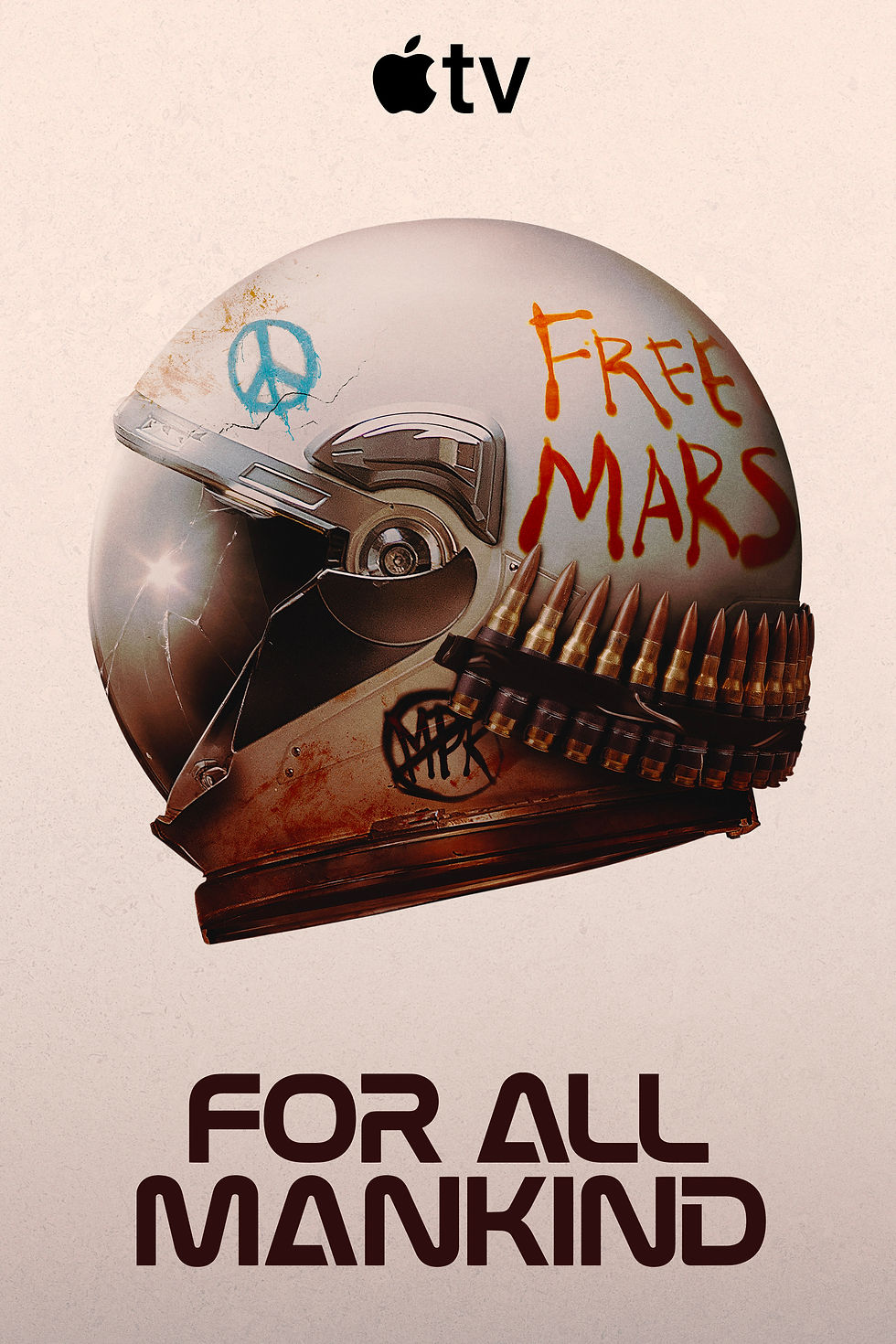
Meanwhile, his grandson Alex graduated high school in a small class of four and prepped to head out to college. But among other things, he was at a crossroads as conflicts erupted throughout Happy Valley, including reports of vandalism sprayed across the platform, all with the same message: Free Mars.
His classmate, Lily Dale, Miles’ daughter, got comfortable in Happy Valley after Miles took her and his wife to live with him years ago, so it didn’t help that she grew increasingly vocal in urging Happy Valley to function more as its own system.
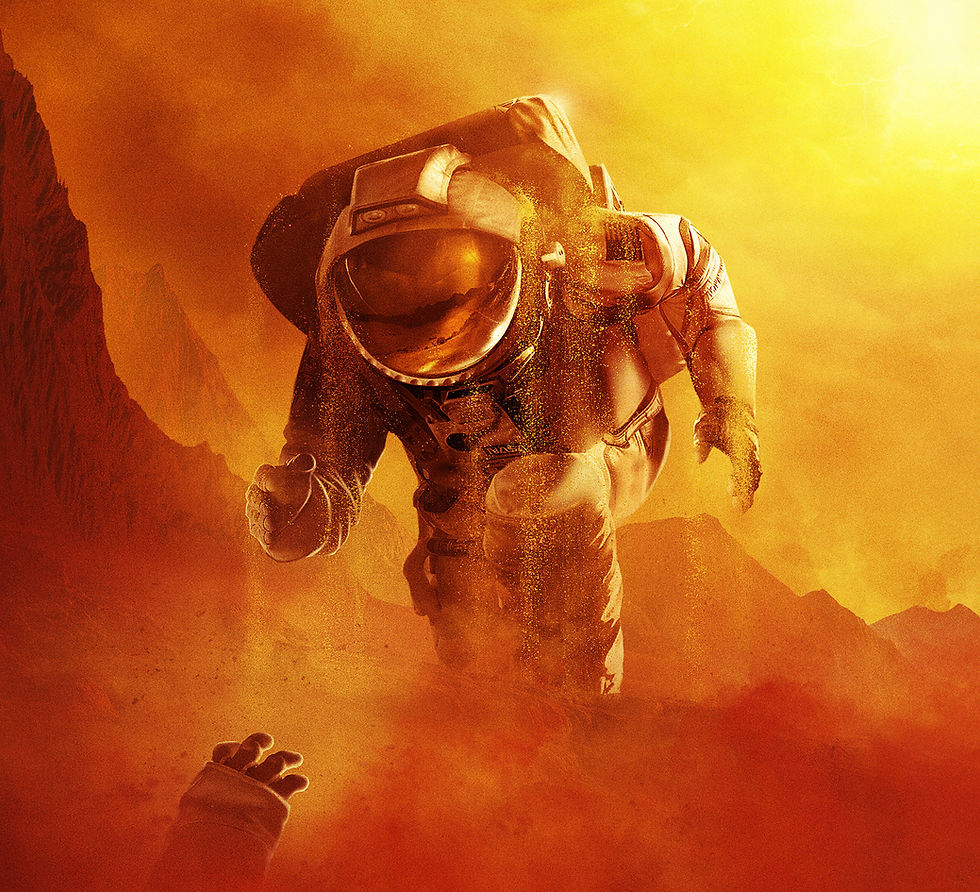
Tensions began to rise throughout Mars after Alex went out riding his Martian motorbike – a complimentary gift from Helios – when he noticed a human stranded in the middle of the Martian landscape and wearing no astronaut suit. The Martian communities and even the Earth-based M-6 (Mars-6 Alliance) panicked in response to this discovery because this was the first time a recorded murder occurred on Mars. It sparked plenty of investigations, the first wave of which pointed to Jung-Gil, whom Ed befriended at the end of last season, as the likeliest culprit. Outraged by what they saw as a frame-up, Ed and his friends launched a spacecraft and evacuated Jung-Gil to safety.
But it came at a heavy price. Despite their successful rescue, it worsened Ed’s condition until it finally ended with him slowly but surely dying in his own bed with Alex by his side.
But then, shortly after he was out of the picture, a new character came along who we’ve technically seen before: a young lady named Avery ‘A.J.’ Jarrett Stevens, Daniel Stevens’ daughter and Gordon and Tracy Stevens’ granddaughter. Having grown up in a hostile environment that left her compelled to fight back, which resulted in her being expelled from plenty of high schools, she became determined to step out of her father’s shadow and prove her own worth as a resilient astronaut. She was willing to partake in any mission necessary and thus build a legacy separate from that of not only her father, due to his infamous activities up on Mars, but also from her uncle, Jimmy, after he unwittingly partook in the bombing of the Johnson Space Center at the end of Season 3.
Meanwhile, Dev, head of Helios, continued to pursue his entrepreneurial ambitions on Mars with two major developments. First, he arranged a new mission to send the first people to the Moon of Titan, partly to search for extraterrestrial life in the galaxy with that as their starting point. Second, while Happy Valley already had crops to grow and a steady supply of food and electricity, Dev envisioned a utopian establishment called Meru. It would provide an artificial beach, affordable housing, and luxurious accommodations for the Martian natives, or, as they were called in this show, Marsies. Of course, as soon as Alex, who was looking for a job shortly after graduating, was hired by Dev to oversee the Helios databases, he caught wind of some incriminating documents that revealed that Dev was working with the Soviet Union to introduce robots to replace all human life on Mars, which would change the course of Martian inhabitation as they knew it for the worse. So, once he and Lily looked into it, they stopped at nothing to share it with everyone on Mars so they’d know what was going on regarding such potentially underhanded deeds.
Meanwhile, the show introduced another new character: Celia Boyd, part of Happy Valley’s police force, the Mars Peacekeepers. She was tasked with taking down any rogue Marsies who were up to some trouble, including the graffiti artist who sprayed ‘Free Mars’ all across Happy Valley. However, she witnessed unscheduled, unmonitored landings near the Happy Valley base. Noticing something suspicious on the Martian surface, she decided to look into it until her investigation entangled her in the conspiracy that started to circulate throughout Mars, part of which revolved around the documents Alex and Lily found and unveiled.
What would the documents that Alex and Lily found say about the elite Marsies’ long-term vision? What would Boyd’s efforts eventually reveal about the suspicious activities on Mars? And would A.J.’s efforts be successful and put her on a more fruitful path than what her father and uncle took?
And most of all, what would their intertwining motives say about the future of Mars as a communal, habitable planet?

Frankly, this season had some storytelling inconsistencies. For example, it took a sharp turn when Ed passed away, and A.J. came along to share the spotlight. In everything else, however, Season 5 may have dipped the deepest into conspiratorial waters. This is where the show looked into the motivations behind the M-6’s decisions back on Earth and what they had in mind for Mars, as Dev did as a branch of Helios.
The rest of the season centered on the local Marsies’ reactions to the ongoing conspiracies as they wrapped their heads around what they believed would be most disastrous or beneficial for Mars as a planet, and tried to get to the bottom of these conflicts before they escalated and threw their Martian establishment out of whack.
For example, as soon as Alex and Lily discovered the documents Dev kept private in his computers, they felt the information was too huge to keep secret and had to share them with the rest of Happy Valley. Once they did, it would spill out not just onto Happy Valley, but to Earth. So you can imagine the butterfly effects this would have once everyone caught on to what M-6 and Dev mapped out for Mars.
While I was initially turned off by Ed Baldwin’s borderline lack of a role this season, what I do admire about what little role he had was that, outside of demonstrating how reckless and stubborn he was, when it came to trying to play his hand in the evolution of the space mission despite his ailing condition, his long-term contributions played a long-term role in the unraveling of the conspiracies that circulated on Mars, starting with, among other things, the first murder on Mars.
At first, what bugged me about how Ed evacuated Jung-Gil to the Independent Spacefaring Nations (ISN) compound nearby was how Jung-Gil stayed there and didn’t come out or get addressed in any way for the next few episodes until he came back. What was he doing all this time, and how did he make it back to Happy Valley unscathed and undetected, anyway?
At the same time, though, it demonstrated this season’s testy nature as the characters caught wind of all the uncertainties and red flags sprouting everywhere in Happy Valley. As things were more likely to blow up in their faces, I was convinced that Happy Valley couldn’t have been a more ironic name for this Martian establishment.
And that’s probably the strongest part of the season: the conspiracy.
For the past few seasons, the show revolved around America’s desperation to attain its stronghold within the Space Race, not only in terms of its explorations of either the Moon or Mars, but also in its determination to resolve the dilemmas at hand regarding their planetary explorations as they continued to maintain what they strove for in their drive to explore the farthest reaches of space.
In this season, however, the conflicts that began to erupt concerned more of the Marsies’ correspondence to each other and whether there were any motivations underway that would test the Marsies’ willingness to operate as a collective community, and also, of course, in a collaborative community when it came to their home base on Earth.
Besides, once it became clear what M-6 and Dev had in mind for Mars as a source of habitation, the Marsies grew angrier and more restless about their motivations, as they told their friends and families back on Earth that Mars was their home. To them, they wouldn’t need any further assistance from M-6, or even the United States, the Soviet Union, North Korea, India, Japan, or anyone else on Earth, and Mars would remain independent.
That’s how the Marsies established what was termed the SDM: The Sons and Daughters of Mars.

Meanwhile, when A.J. came along, she provided a good chunk of the season’s Earthly intrigue. She brought the most heart and conflict to what happened when the show wasn’t busy with the drama back on Mars, as things there started to go to Hell in a handbasket.
As we’ve seen Danny and Jimmy do throughout the rest of the show, they left behind an infamous reputation for the damage they caused: Jimmy for unwittingly partaking in a terrorist group, and Danny for carelessly leaving behind wreckage back on Mars that killed a couple of fellow astronauts, on top of also being entangled with Ed’s love life.
It had enough dramatic momentum on both sides of the coin to explore with the exposure and intrigue needed to raise the stakes and dive deep into the characters’ psychosis as they confronted whatever unwelcome detours lay ahead for either the Marsies or those back on Earth.
At one point, we even got a welcome glimpse of what went on the lunar surface, mostly in the reveal of newbie astronauts gunning down targets for practice. It must not have been since Season 2 that we last saw what occurred on the Moon as soldiers practiced as astronauts, as Kelly also would as part of her training to join the Space Cadets and the NASA team.
I found the whole prospect of replacing humans with robots in this universe a little confusing, but no less fascinating. On the one hand, why would Dev want to replace the humans in Happy Valley with robots when he wanted to establish Meru? Unless, that is, he wanted the robots to build Meru. On the other hand, it seemed fascinating because, at the time of this season’s airing, we’re engaging in an all-out debate about whether AI could replace human hands for science, creativity, art, politics, you name it. Simply put, it tests human ingenuity in the age of artificial intelligence.
And seeing it addressed by sneaking robotic figures onto Happy Valley on Mars to replace humans seemed like a fitting way for For All Mankind to tackle this. Much like how the last season addressed asteroid mining when the news broke about 16 Psyche, this season also threw in its two cents on the rise of AI in the form of robots. Admittedly, the idea of robots replacing humans may sound a little too sci-fi even for this show. But since we’re already at the stage where some robots have been programmed to develop human likenesses, and AI has already grown large in its presence, there’s no telling how much of a reality this could turn out to be after all.
Maybe it’s for the best that For All Mankind decided to throw something so seemingly sci-fi at what is otherwise a real, ongoing issue right now. I’m starting to admire For All Mankind for what it chose to address about ongoing issues such as these.
But now, let’s talk about the returning characters and the roles they played in the show’s development this season.

The most surprising example of returning characters, for my money, was Irina Morozova.
As we saw last season, she guided Margo through uncertain pivots that tested Margo’s and Aleida’s reliance on her as intel for the Soviet Union. After all, as we may remember from the end of the last season, Margo and Aleida found out about Sergei, whom Margo trusted, being assassinated in his own hotel room. Once they caught on, they retaliated by hijacking the NASA system to fling Goldilocks into Mars’ orbit instead of Earth’s. That, in turn, resulted in a series of brutal punishments for Irina back in the Soviet Union. Meanwhile, once her entanglement with Irina became known, Margo was incarcerated for her troubles. Because of this, Aleida visited Margo several times in her jail cell to ask how she could help Helios with their stronghold on Mars.
However, even though it looked like bad news when she was finally let go and allowed to rejoin Aleida and the rest of the Space Force, she came into Happy Valley arguably differently than before. Apparently, she tried to determine the Soviet Union’s trustworthiness in the Space Race but was also nonplussed by the conspiracies roaming the Martian surface, such as the first murder on the planet and the documents that Alex and Lily leaked after deciding that enough was enough. Even though Aleida understandably did not trust Irina as they collaborated to maintain their position within Happy Valley, Irina became more engaging than ever this season because of what her background put her through and what she was willing to do to arrange proper negotiations for everyone on Mars.
As for Aleida herself, she grew noticeably experienced as the CEO of Helios. Despite her obvious distrust of Irina when she came along to join the party, her willingness to trust Dev, especially as a Helios coworker, as well as her assessments as to where her trust lay in the development of the space mission on Mars, demonstrated just what she was in for and how much she was willing to hold on to what she held dear if she was to resolve the chaos erupting all around her on Mars.

What Kelly Baldwin decided to do this season made for a pretty exciting venture for her as a character. For a good chunk of the show, I remember her as more willing to investigate life on Mars, like its snowcaps and their molecules. But in this season, outside of her uncertainty when it came to making sure Ed Baldwin kept himself under control, she eventually took on the opportunity to join her coworkers in the first-ever manned mission to Titan, especially after hearing that the first attempt left some of her fellow astronauts for dead after being caught in a trajectory that projected them further away from Titan. When she heard the news, she felt compelled to join the next wave of astronauts to investigate Titan’s surface and see what they could find on that Moon. And yes, despite her captain Walt Briebel’s complaints, she had ideas for how to navigate the spacecraft through where it left the last group for dead so they could land on Titan and see what they could find there. She recalled at one point what Ed told her about his dreams. Had he been among the astronauts who could’ve landed on the Moon ahead of the Soviets, Ed wanted to be among the first to land there and plant a plaque on its surface that read, ‘We come in peace for all mankind’. Because she knew Ed’s stubbornness kept him from fulfilling that promise when he was alive, it only fueled her determination to do what her father tried to do and be among the first people in history to chart a course into outer space by colonizing other distinct planets. After settling on the Moon from Earth, then onto Mars from the Moon, settling onto Titan from Mars was her biggest chance.
As for Alex, who was getting the hang of becoming his own man after graduating with Lily, he began to show his own worth as another trustworthy, studious, and savvy Baldwin. Whereas Ed was stubborn with his ambitions, and Kelly began to show her worth as a Baldwin by willingly lunging headfirst into what she knew was risky terrain as she joined the Titan mission, Alex began to show his worth by sharing the evidence he found with the rest of the Martian community, with Lily doing so with him. Once he and Lily decided to do the unthinkable and pass along the documents he found in the Helios databases, the leak shook Happy Valley and the rest of the M-6 to their very core. From then on, it sparked a wave of testiness that ran rampant across Earth, the Moon, and Mars. Alex, despite his savviness and trustworthy nature, found himself at a crossroads he and Lily hadn’t seen coming, navigating the chaos he and Lily unwittingly jump-started as they were pushed into heated waters and territorial disputes.
Whereas Alex was more shy about letting loose some incriminating evidence that he knew others had to know about, Lily was more proactive, restless, and daring about making her stance on Martian inhabitation known and was the most willing to leak the documents so everybody on Mars, the Moon, and Earth would know about what went on on Mars and why she felt it was crucial to let everybody know about what was going on.
What I found interesting about her character was that, despite her willingness to do anything it took to help the Martian community, she still had her own blind spots. For example, she didn’t know that her father, Miles, was involved in nefarious activity on Mars in 2003 that led him to make decisions for Lily the way he did. In another poignant turn of events, Lily surprised Alex with a birthday gift within one of the agriculture domes as she and their friends danced along with him to Alex’s favorite song, Nikki Minaj’s ‘Starships’. However, during the dance, the glass above the agriculture dome shattered, putting everyone at risk of being sucked into the Martian atmosphere. It resulted in Lily and Alex’s classmate, Gulsora Akilmatova, biting the dust, and it left Lily devastated by her mistake.
It was also revealed that she was the graffiti artist who went around in secret and sprayed ‘Free Mars’ all across Happy Valley. So she took a proactive stance in the Martian community and was willing to show it, no matter what firestorms her actions might bring.

As for Miles, he, too, tried to maintain his hold on the Martian community, mostly by laying low for himself and his family, knowing that what he dealt with last season was mainly so he could get another job and provide for his family. And because of all the atrocities he endured back in 2003 and what he had to endure this season, he did whatever it took not to step out too far of line and see to it that he and his family would make themselves most comfortable in Happy Valley after being given what felt like a once-in-a-lifetime opportunity for himself and his family. However, because we would see that Miles was secretly in negotiations with Palmer James, sheriff of the Mars Peacekeepers, to keep quiet about the abuse that Miles put up with last season, which in turn resulted in the riot that left Danielle taking a bullet, it resulted in him finding whatever method it took to keep himself and his family at bay and stay out of trouble when things started to erupt all around him.
Of course, when the source of his misfortunes on Mars began to sprout forth, and he found out that Lily had some involvement in it, that’s when it tested his true nature, making him see where his devotions lay in the grand scheme of things and whether that would spell any sense of allegiance to Happy Valley as a community.
Finally, you have the policewoman Celia Boyd, who simply did her job as part of the Mars Peacekeepers when she caught on to suspicious activities roaming about Mars relating to the murder of the astronaut on the Martian surface. She was a bit like Misato in Neon Genesis Evangelion: she was willing to question anyone and do anything it took to get to the bottom of the mysteries she witnessed firsthand. It didn’t help that, in the middle of her investigations, she was caught trying to snoop on her coworkers’ business, which led to her being apprehended and questioned about her involvement. It also didn’t help that she and the rest of her fellow Peacekeepers were looked down upon because the leak of Dev’s documents painted them in a negative light. It implied they also had something to do with introducing robots on Mars to replace humans. So, the more things erupted around her on Mars, the more it began to test her willingness to see what must be done and also put the mystery of the death of the astronaut on Mars to bed.
And finally, let’s look at A.J. Stevens. Despite my uncertainties about her involvement this season after Ed Baldwin’s passing, she provided a neat detour for the Stevenses, because what Jimmy and Danny did when they were still out and about took a heavy toll on the Stevens’ reputation. A.J. was determined to try to prove her worth, especially after being subject to much harassment and fights, in part because of the infamous reputation her father and uncle left, and thus wanted to do anything it took to prove them wrong, show everyone why she was different from her father and her uncle, and show how she was willing to do anything it took to fix the wrongs because of what the last generation left behind.
Once she was roped into the chaos that erupted throughout Mars, that’s when it would test her inner nature and see whether she truly had what it took to set herself apart from her ancestors, or if what she planned to do in response to the chaos on Mars would show that it ran in the family, and nothing more. Would she have what it took to do her grandparents proud and put Danny and Timmy Stevens to shame?
Finally, this season worked as well as it did thanks to the still-evident contributions of the actors, many of whom came back from the past few seasons. They continued to elevate their characters through engaging performances, conveying them not only through their backgrounds or where they stood, but also through what they faced.
Coral Peña continued to astound me as she unleashed Aleida’s professionalism in the space department, particularly at Helios, where she seemed to have enough expertise to become a legitimate CEO alongside Dev—all her time working under Margo’s wing clearly paid off, as we’ve seen her prove her worth in this season. But there were other times when the younger part of her, who relied on Margo, still trusted her for help, and Peña conveyed that part of her well. She balanced her adult mannerisms with a trace of the youthful, wide-eyed, idealized part of Aleida that still looked up to her superiors, even the most suspect of them all, for any advice necessary.

Edi Gathegi continued to emphasize what Dev envisioned for the future of space, starting with his vision of Meru. Regardless of his long-term intentions, I could tell he was a visionary who wanted to ensure things went according to plan for himself, his fellow Marsies, and their future on Mars as a habitable community, even if his visions didn’t always add up to an agreeable road ahead. Of course, when his documents surfaced and became public knowledge after being classified, his disillusionment and confusion showed that his stance in the Martian community was tested as he tried to understand where he stood while the wars that sprouted up between the Marsies and the rest of the space community began to escalate.
In his final performance in the show, Joel Kinnaman emitted one heck of a final hurrah for Ed Baldwin.
Even in his character’s elderly age, he emphasized what a terrific but also stubborn astronaut Ed Baldwin was as he attempted to get in touch with his inner rebel and set right what he believed was going wrong, especially if part of it was out of a desperation to get back into the pilot’s seat again and venture out into space. In a particularly harrowing final series of scenes in ‘Home’, he recounted his experiences in the Korean War and what he endured, so he could finally prove his worth as an astronaut worthy of taking on NASA missions before the Soviets could beat them into landing on the Moon. So, from what he brought forth for his character’s last moments in the show, Kinnaman provided the right amount of emotional pathos necessary to highlight what a remarkable journey he had throughout the four and a half seasons of the show in which he was involved and demonstrate why he was so revered and cherished within the NASA community.
Meanwhile, the actors who played Alex and Lily – Sean Kaufman for Alex and Ruby Cruz for Lily – amped their teenage instincts with their inner sense of rebellion and their willingness to do what they believed was right, while also highlighting just how immature they ultimately were and how much their willingness to right what they believed were wrongs worth righting put them in crosshairs that would determine just how much in a world of hurt that they didn’t know they would be in because of their efforts. Because of what they did, so much trouble would erupt throughout Happy Valley, the Martian community, and back on Earth; it would test their willingness to show their worth to each other and to the rest of their families. Both Sean Kaufman and Ruby Cruz demonstrated that in true fashion.
Now, how well did each actor play their character individually? Sean Kaufman highlighted Alex’s humility, even when he knew he and Lily were lunging into unfamiliar territory. At the same time, Ruby Cruz was feisty in conveying Lily’s determination to set right what she believed was wrong, come what may.
Cynthy Wu not only got more in touch with Kelly’s humble side, especially as both Alex’s mother and Ed Baldwin’s daughter, but when she began to unleash her drive to do humanity proud by joining the Sojourner crew to Titan, she began to unleash her inner warrior as she and the rest of the Sojourner crew were on the verge of making history in a way that she believed Ed tried to do but could never fully accomplish. She showed it most clearly through her drive, love for Alex, devotion to her colleagues, and unwavering willingness to make history. She clearly proved her worth as a fellow astronaut, and her characteristics and experiences helped Wu show what went through Kelly’s head as she approached the unknown with her crew.
But let’s get to the new actors who joined this new season of For All Mankind.

Mireille Enos showed clear commitment as Celia Bord, but also a wide range of conflict as she caught on to the unscrupulous activities erupting around Mars, whether it was the first murder on Mars or the leak of documents detailing the introduction of robots into Happy Valley. The way she was willing to confront any opposition, whether it’s Ed Baldwin, Lily, or even her fellow police cohorts, demonstrated an inner lioness in her that made her more compelled to set the right examples and also maintain what she had left as a policewoman when things started to unravel around her.
I was genuinely impressed by the actress who played A.J. Stevens, Ines Asserson. It would be one thing to evaluate her as just an up-and-coming young woman who wanted to prove her worth after years of torment and humiliation. However, when you add to it the fact that A.J. was related to Gordon and Tracy Stevens and also to a couple of men who left behind some pretty damaging reputations in their wake, it would help you look at her through those experiences and secretly hope for her to turn things around for the sake of her family. What’s more, her willingness to prove her worth as a Stevens also tested her drive and demonstrated exactly what she would do to do so, whether she knew she was beginning to venture sideways or not.
And let’s not forget Svetlana Efremova, who played Irina. Maintaining the sneaky essence she mastered after we saw her collaborate more with Margo last season, I like how she kept it as she was let out of the Soviet Union and rejoined the rest of the characters on Happy Valley, only with less unscrupulousness than before. This time, she began to act more like another Soviet worker, adherent to whatever space missions she knew would be fruitful as a whole. Where I saw malice in her last season, this time I noticed plenty of level-headedness and desperation in its place. To me, that propelled Irina in new directions I didn’t expect her to go this season.
Toby Kebbell continued to show Miles’ humility and determination to get to the bottom of what went on around him and his family before things went even more haywire and before he lost more control than he already had. But because Miles was also looking out for Lily, his inner warrior began to work its way through and ultimately determine his long-term worth as a collaborative astronaut in Happy Valley and a cooperative member of the Happy Valley community. Every time we’d see that in action, Kebbell took what his character expressed and how he handled it to the next level, even compared to what he mastered last season.
But this leads me to what I still consider the most impressive part of the season, and of the show: the aging effects. I couldn’t tell whether it was makeup or visual effects, but they were primarily on Joel Kinnaman as Ed and Wrenn Schmidt as Margo, and no less effective.
Once the wrinkles became more noticeable on Joel Kinnaman, you could feel Ed Baldwin’s age as he not only began to succumb to his cancer, but also understood why he was so driven to do what he was told not to do, despite his age insisting he take a step back. So, once you see him in action and trying to set the right examples he believed he should set, that’s when I began to appreciate Ed for what he tried to do, even as his means of achieving it grew more reckless and stubborn throughout the show.
In fact, that’s what I admire about Ed Baldwin, now that I think about it. In the first part of this series, I saw him more as your everyman who wanted his shot in space. But what made him increasingly interesting was his rebellious side, as he did whatever it took to make his way into space again when he wasn’t tied up with the family drama that kept him on Earth. However, everything Ed Baldwin achieved throughout the show reached a satisfying conclusion this season, while still leaving the door open for other characters to follow suit, especially as things started to take a turn for the worse.
The effects were also exceptional in reflecting Margo in her age as well, because she had to spend a good chunk of her life in prison after her nefarious entanglement with the Soviets became public, especially the fact that she was presumed to have been dead following the 1995 bombing of the Johnson Space Center. It put her on edge about how she would be received, especially since she had worked with the Soviets the whole time.
Here, in her cell, she looked like she accepted her fate, while still being a good source of knowledge as Aleida tried to work her way through the messes that hounded her and her friends back in Happy Valley. It’s hard to say whether she will make an appearance next season, but for what Wrenn Schmidt gave Margo this season, she still excelled at making even her smallest moments count.
But finally, let’s hop over to what I consider my favorite part of the season: its last half.

And keep in mind, this is where I will venture into spoiler territory. Read at your own risk.
As soon as Alex and Lily caught on to the documents that Dev mapped out with the Soviets to introduce robots into the Martian community in place of the humans, they were outraged and saw to it that they shared them with the general public, since Alex was working with Helios now, so they could understand what Helios and the Soviets planned to do and how much that conflicted with what Happy Valley thought was necessary for their evolution as a Martian community. Because it validated Lily’s belief that Mars should be its own independent planet, it sparked a firestorm of insults and attacks that tested Happy Valley’s resilience and its willingness to adjust as a community. First off, because they knew that the Mars Peacekeepers were involved in the plot to have the robots take over the human facilities on Mars, it resulted in a nasty battle between them and the protesting Marsies, who partook in a movement called ‘Mars is Ours’. Shortly after it got started, it erupted into a full-scale riot, the likes of which I recognized too well from the Season 4 finale, complete with tear gas and gunshots. Ultimately, it ended with the rebels overpowering the Mars Peacekeepers and holding them and everyone at MOCC (Mars Operations Control Center) hostage as they attempted to turn things around for Happy Valley as a community.
And what happened after that? Once word spread about the riot back on Happy Valley, M-6 decided to cut off all their connections to Happy Valley, leaving them to survive on their own: no electricity, no food, and barely any leftover oxygen. As a result, they were at Mars’ mercy as they scrambled to survive in what was dangerously close to becoming a shell of what had once been Happy Valley.
Soon after, the Happy Valley residents decided not to cooperate and continued their protest by forming the Sons and Daughters of Mars. Ultimately, the M-6 – which, I forgot to mention, was what the M-7 became after North Korea was kicked out and barred from overseeing the space efforts – decided to send in ground troops, find the Happy Valley rebels, put them in their place for their troubles, and even seize the resources from Goldilocks. To make things even more complicated, among the people taking part in this hunt were A.J., who joined her fellow Marines in the mission to handle the Happy Valley rebels, and Marcus Hasskel, who was Alex’s best friend throughout their childhood and graduated with him and Lily.
Because of that, Happy Valley set up a series of booby traps and coordinated attacks as they prepped to attack Earth’s invading soldiers. One of the most tragic examples was Celia Boyd’s attempt to land a space shuttle, despite limited fuel, on the Kuznetsov Station on Goldilocks. What they hoped would’ve been a nonviolent act of rebellion instead took a nasty detour for the people settling there from Earth, especially A.J. From there, it only escalated the conflict between Earth and Happy Valley.
As you can tell, this season of For All Mankind was arguably the most heated of all the seasons, and the ongoing conflicts reminded me a lot of what happened in Season 2, when the Americans and Soviets fought each other on the lunar surface.

I can’t say I didn’t see this coming, though. Look at this image of the astronaut helmet with ‘Free Mars’ written on it. It looks like something right out of Full Metal Jacket, and that told me this season would take on a more psychologically war-torn edge within this otherwise outreach-focused show about space exploration.
This season, it’s gotten so heated that it made me begin to wonder whether this was what For All Mankind was building up to be, where it began to highlight more of the devastations that would unfold in response to some of the mistakes and unscrupulous deeds that were committed, and whether that would have made us or Earth any better off or worse off than we would be in our universe. But I also found this interesting because the whole point of the fights in this series was Happy Valley’s and the Marsies’ determination to separate from Earth, in terms of their reliance, and establish themselves as their own community, one that could function just fine with the technology they had on their person on Mars.
You know, for something that started as the Cold War, particularly as far as the Space Race was concerned, what I saw this season looked less like an extension of the Cold War and more like a second Revolutionary War, only in this case, the independence being sought out was for Mars.
I didn’t expect the show to go that route. Still, for what it had going for it, it made for a truly exciting season with a ton of intrigue and even new revelations that would propel the characters forth and test their willingness to stay put, break the rules, or attempt to right the wrongs in the face of imminent chaos as it began to erupt all around them. It became that way for Miles, Boyd, Alex, Lily, Irina, almost everyone.
What made it even more exciting was that Kelly Baldwin, on her way to Titan with her teammates, was on the verge of making history while completely unaware of the chaos erupting back on Happy Valley. So, it left me on the edge of my seat as I watched the season, unsure of what would happen to Kelly, her family, or everyone on Happy Valley or Titan as they were on the verge of either doing something extraordinary for the sake of humanity, or being on a collision course with chaos on the other side.
Even with Kelly’s discoveries on Titan, I found it exciting not only because of what she and her teammates would find on the surface, but also because of how Happy Valley and planet Earth would react to such a landmark discovery. Since some of their resources relied on the trip to Titan, how would they have reacted to this when they weren’t busy with the ongoing conflicts concerning Happy Valley?
Without giving anything away, however, what Kelly did discover on Titan did seem a little too fantastical, like you could easily see it from Avatar. However, where we’re at with space exploration, we’re still a ways away from exploring Titan’s surface and seeing what could be found lurking on the Moon. So, at least For All Mankind was nice enough to give us a solid firsthand glimpse of what we could discover once we reach out farther into space.

Long story short, it resulted in a hectic, heated, excitable, compelling, and in some cases, tragically ironic fifth season that barely slowed down in its progression towards the finish line in terms of finding whatever resolutions could be possible for the characters before things were worse off than they were before. The acting was still exemplary. The characters were still as interesting as ever. The imaginary scenarios unfolding this season continued to show what could be manageable and achievable when it came to interplanetary habitation. The new characters continued to add to the growing intrigue that the returning characters brought with them.
As for what it wrapped up on, I don’t want to give anything away, but all I can say is that it did result in an almost engaging turn of events that would not only have reaffirmed what the series started with and what the characters meant to achieve throughout the series, but also unleash a whole new wave of events that would guarantee to wrap up For All Mankind in a very strong, high fashion.
The only thing I will say about what it ended on is that once For All Mankind launches into its final season, it will have hopped over to 2020. That only makes me wonder, because 2020 was the year of the COVID pandemic, would that be imminent in the 2020 of this universe, or would it play out differently than it did in our 2020? I know that the Berlin Wall was never torn down in this universe, and I don’t ever recall them mentioning anything about a potential version of 9/11 having occurred in their timeline. So, until we get to that point, all I can say is that For All Mankind had been on fire this season, and if all goes well, it should be followed by a hefty and equally satisfying final season to cap off the entire series.
Personally, though, I’m not too disturbed that next season will be its last because the creators planned For All Mankind to run as long as 7 seasons. However, because the first season started in the late 1960s and extended into the 1970s before each new season hopped forward a decade, being picked up for a seventh season would technically have propelled For All Mankind into the 2030s, just a decade ahead of where For All Mankind would naturally wrap up. But while I am personally tickled that Ben Nedivi, Matt Wolpert, and Ronald Moore’s vision is slowly but surely being fulfilled with each passing season, I believe that Season 6 would feel like the right time to wrap up For All Mankind. If the show went on past the point where it would eventually catch up to real time and extend into the future, it could introduce elements into the narrative that likely wouldn’t be possible in our universe, and maybe venture too far into fantastical territory along the way.
However, by wrapping it up with Season 6, that tells me that it will indeed have a chance to catch up to real time before it has a chance to wrap up, which, by extension, would help the show remain grounded, believable, and maintain its message about where we could go in space had the Space Race never stopped.
If For All Mankind knew how to soar to the stars, this season showed that it knew how to go supernova.
My Rating
A low A


Comments