

Michael (2026)

Updated: Aug 16
Over the past few years, I have looked at and carefully researched some of the most famous musical superstars of all time through the latest musical biopics that made a splash: Elton John with Rocketman and Elvis Presley with his own biopic. Whether they carried any significant accuracy to the music stars’ life stories, I could not have told right away. Still, as long as they each provided an engaging enough look into what their lives were like and what shaped them into being the famous musicians they became years later, there’d still be a shred of authenticity to be felt and appreciated in the biopics made off of each of them.
And it’s not just these films. After seeing other such films as A Complete Unknown, Springsteen: Middle of Nowhere and Bohemian Rhapsody, I slowly came to appreciate the musical biopic as a genre. Not only would I have had the fortune to listen to some good, classic music, but those would be the hors d’oeuvres to complement the main course, which would be the story of how the musician who penned these songs rose into fame and glory in the first place.
After all that exposure, the one biopic I looked forward to most was the musical biopic about the King of Pop himself, Michael Jackson.

Of course, as I anticipated this film, it ran into some problems during production. Among other things, the biopic meant to cover all of Michael’s life, including when Michael was accused of making sexual advances on minors. The legal complications concerning permission to recreate it in a film version of Michael Jackson’s life proved quite difficult and burdensome.
In addition, the film’s original cut lasted a whopping four hours. Considering how much had happened in Michael Jackson’s life, it was to be expected, but I was genuinely interested to see what a four-hour musical biopic could have revealed of the life of a superstar like Michael Jackson.
As for what we ended up with, we got a firsthand glimpse into Michael Jackson’s early life.
Did it live up to its potential of doing Michael Jackson right? Well, let’s take a closer look at the story.
Starting in the mid-to-late 1960s in Gary, Indiana, Michael Jackson grew up with his brothers as they all tried to perform together as a band under the direction of their father, Joseph Jackson. Despite it causing some problems for the family, such as the boys missing school due to their performances and any of them getting a beating by Joseph if any of them went sideways, the combined talents of Michael and his brothers soon caught the attention of the local public, and soon the national public, which, in turn, paved the way for their time to shine as the Jackson 5.
Of course, though Jackson 5 began to perform increasingly well and climbed their way to the top, Joseph’s dream for his sons was to have them rake in all the dough to support themselves as a family. What’s more, Joseph, as their manager, began to arrange some tours that became too overbearing for Michael and his brothers, who, under the enlightenment of their talents, began to develop their own ideas of music that’d capture their fans’ hearts.
It all came to a head when Michael, who was eventually singled out for his impressive vocals, decided to break off from the Jackson 5 and engage in his own work as a solo artist. However, his father wasn’t finished with Michael, for he still expected him to be the absolute best he could be as an artist, so that the money that’d come in would be extended over to their family. Joseph’s overbearing demands, however, combined with his desperation to have the Jackson 5 together so they’d perform together and make even more money, pitted Michael and Joseph against each other as Michael began to embrace his gift as a musician when he wasn’t under his father’s progressively unscrupulous influence, beginning with Michael’s hiring of John Branca as his attorney and his collaborations with long-time producer Quincy Jones.
The following events, including Michael Jackson deciding to have surgery done on his nose to look less African-American, his firing of Joseph Jackson as his music manager, and even his Pepsi commercial fiasco in 1984, were just among the multiple adversaries he encountered as he slowly rose into fame and became the ever-glorified and heralded King of Pop.
What further challenges did Michael have to deal with to make his way to the top? Would Joseph have had his hold on Michael and his brothers for long? And what challenges did Michael’s strive for independence in music pose for his family and himself?
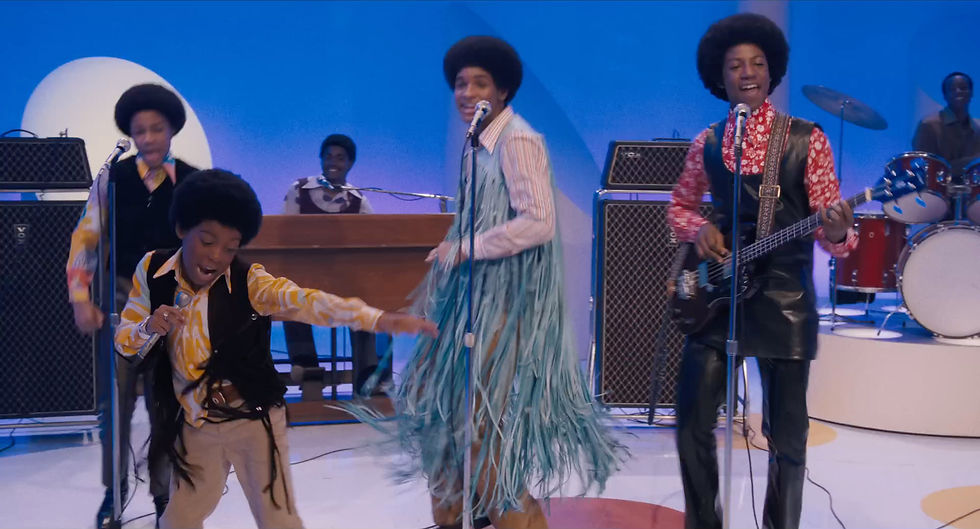
Admittedly, I’d known of Michael Jackson through his music, just like everyone else. But also like everyone else, I may have been more used to his superstar image without knowing a thing about his background and the struggles he went through to work his way into the musical elite. As I mentioned in my Free Willy review, his song, ‘Will You Be There’, was the very first song of his that I ever heard in my life, and I slowly became more acquainted with his music the more I heard it. By extension, it was around high school that I heard what would slowly become my all-time favorite song by Michael Jackson, ‘Smooth Criminal’, and shortly after that, Michael Jackson continued to gradually flourish in my subconscious as an epitome of legendary musicians.
Of course, it was easy for me to forget how Michael Jackson got his start as part of the hip, bebop-like, but still funky and fun Jackson 5. Nonetheless, his influence was apparent as early as the mid-1970s, and Michael Jackson’s uniqueness as an artist and his talents helped make him the household name that he became.
But boy, did I not anticipate all the rough terrain he had to go through, either with his brothers or as part of the family.
But before I dive further into that, let’s talk about some of the more noticeable elements of this picture.
Let’s start with the acting.
Of all people, the actor playing Walter Yetnikoff, the head of CBS Records, was Mike Myers. And if you don’t mind this expression, I found his performance to be the most colorful in the entire movie. His deliveries carried a range of qualities that effectively conveyed his emotions and expressions as he wrapped his head around allowing Michael Jackson, a black singer, to air his music videos, especially ‘Billie Jean’, on MTV.
I also found it surreal that this was Mike Myers playing this role; the last time he was in a musical biopic was when he played Ray Foster in Bohemian Rhapsody – and both movies shared the same producer in Graham King, mind you – who argued with the Queen members about their musical choices, particularly the length of their titular tune. In this film, Water Yetnikoff was the Doubting Thomas, as he was skeptical about letting Michael Jackson air his music videos on MTV, since no black artist had ever done so before. However, his commitment to ensuring that the MTV lineup went according to plan without any major distractions to intervene with potential progress did highlight what values he did see in Michael Jackson, so that’d tell me that he knew talent when he saw it, as hilariously outlandish as it was to see him arrange it for Michael Jackson.
The actress who played Katherine Jackson, Nia Long, had some good moments with her. She helped hone the motherly instincts and protection that Michael and his brothers would’ve needed. And as Joseph’s attitude became more ruthless and intolerable, that’s when she let loose her protective urges to be on Michael and his brothers’ side and fend him off long enough to trust her sons to do right by their own work without having to rely on Joseph’s more obtrusive demands.
Honestly, when Katherine confronted Joseph about his unreasonably high demands from their sons about their musical success, she shot him down, telling him that Michael and his brothers were going to find their own way soon enough, and that unless Joseph acknowledged that, he would have truly lost them. The more that she tolerated Joseph’s behavior in this movie, the more it began to add up. I felt such a simmering resentment towards Joseph from her, even compared to what Michael conveyed, that I expected her to go full out and rip him a new one the way Rose did to Troy in Fences.
The actors who played the other Jackson brothers, Jackie, Tito, Jermaine, and Marlon, played each of them with enough brotherly banter to help them stand out as a group. Admittedly, though, I didn’t remember any one actor playing any of them with more distinctive elements to separate them from each other, but whenever they weren’t busy working as part of the Jackson 5, what each actor lent to them helped them come alive well enough to lend them some family camaraderie when needed.
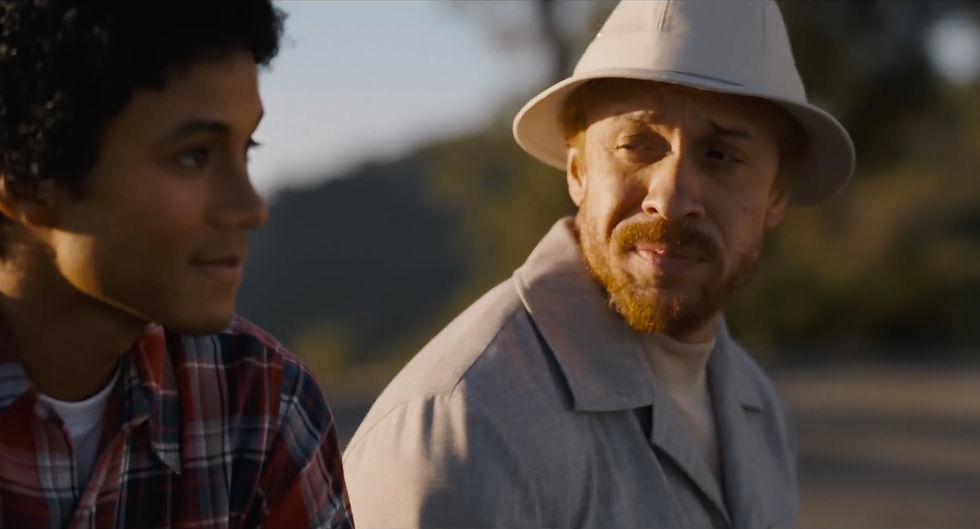
I remember Michael Jackson’s bodyguard, Bill Bray, and I remember him well for the understanding, lenient, almost sympathetic demeanor KeiLyn Durrel Jones gave him. He played him with such evident commitment and dedication to Michael Jackson’s rising success as an artist that you could say he became the closest thing to a best friend Michael Jackson could ever have asked for. Though he may not have been as involved as he most likely would’ve been when on Michael Jackson’s side, his commitment to being on Michael Jackson’s side still spoke volumes.
For better or for worse, I remember what a standoffish performance Colman Domingo provided to Michael Jackson’s father, Joseph Jackson. With his unwavering commitment to refining his sons’ talents to the fullest, his relentless attitude toward them reached a point where his difficult demands and ideas about arranging for his sons to perform on stage made him increasingly despicable, especially in Michael’s eyes. Sometimes, he wasn’t without his sympathetic moments, such as when he looked at Michael and wondered what he had done to his nose, or when he came in flabbergasted and betrayed when Michael took the initiative to fire him as the manager. His shortsighted desperation for money for the Jacksons became more prominent the longer Joseph was involved in Michael’s life, and you can see just why Michael struggled to make his own break independently from Joseph’s influence.
Probably the most infamous example I can think of regarding how neglectful Joseph was to Michael was during the Pepsi commercial incident in 1984, where Michael was about to perform, only for the blasters behind him to have his hair catch on fire, and that left him with a burnt scalp on the back of his head. And when Michael Jackson’s family waited for the reports of Michael’s welfare at the hospital, what was Joseph’s first question? It was how soon he could perform again.
See, that is exactly why the love of money is the root of all evil.
Only there’s more to it, as far as Joseph was concerned, than that, and I’ll elaborate more on that when I get to it.
But now, let’s get to the crème de la crème of performances in this film: Jafaar Jackson as his uncle, Michael Jackson.
I understood that Jafaar was lucky enough to have known Michael in person when he was alive. But looking at what Jafaar lent to his role as his late uncle, he played it as if he personally knew Michael like the back of his hand. I know that Jafaar was born in 2000, whereas Michael sadly died in 2009.
Whether it was that, or just being told stories about his uncle’s musical integrity and rise to fame, Jafaar must have expressed such deep, devoted respect for his uncle to portray him with such authenticity and prowess as he did here. Even his voice, when he was or was not singing, sounded just like how Michael Jackson would’ve spoken during his earlier years.
But he captured more than just his likeness. I could feel his anguish, his pride, his aspirations, his dreams, and his moral struggles all through what Jafaar conveyed of Michael in this film. It was so convincing that he might have gone from idolizing Michael to being him. That’s how convincing a performance he gave as Michael Jackson. Way to do your old man proud, Jafaar!

On top of that, the young kid who played the younger Michael when he was part of the Jackson 5, Juliano Valdi, was also just as convincing. He captured the youthful energy and vibes of a young boy who was getting by with the splendid voice he had as he performed his songs with his brothers. However, he also captured the frightened, pained, and struggling aspects of a young child who was pressured into superstardom and did his best to get by when not dealing with the abuses he tolerated from his father. It helped highlight the physical and even moral battles Michael and his brothers had to deal with from their father.
While it was undoubtedly fun to hear the Jackson 5 and Michael Jackson’s classic tunes in the movie, I looked at Jafaar Jackson and Juliano Valdi’s singing skills and thought of them as nonexistent. The reason was that the vocals, as they sang Michael Jackson’s songs, sounded too much like how Jackson performed them, either as part of the Jackson 5 or on his own. If they already got Michael Jackson’s speaking roles down to a tee, why not the singing modes, too? Look at Taron Egerton and how well he replicated Elton John’s voice when he sang his songs. Or how about Austin Butler when he sang Elvis Presley’s songs? Or Rami Malek when he sang Freddy Mercury’s songs for Queen in Bohemian Rhapsody? They all worked so well because they captured the physical, spiritual, vocal, and musical prowess of each artist while sneaking in some personal touches to their vocal and musical interpretations. But because both Jafaar Jackson and Juliano Valdi did such a terrific job of playing Michael Jackson during his heyday and formative years, I personally thought they could’ve gone the extra mile by having them perform the musical numbers themselves and hone their vocals so they’d match how Michael Jackson sang his songs.
Little did I know they had already done that.
It turned out that, yes, Jafaar Jackson and Juliano Valdi not only performed the songs but also honed their vocals to match Michael Jackson’s voice as closely as possible. A part of me wished that Michael Jackson’s songs were performed with more of a personal touch to emphasize the unique talents of both actors. But at the same time, Michael Jackson’s voice is unique and easily iconic. I figured that if anything were lost in translation regarding the recapturing of Michael Jackson’s voice when he spoke or sang, it would’ve unintentionally marred the cinematic retelling of the first half of his story. While I still have mixed feelings about mixing their vocals with Michael Jackson’s vocals from his earlier recordings on some songs, what these two actors did in capturing Michael Jackson’s voice in his songs was genuinely remarkable.
And of course, this movie wouldn’t have been the true reflection of Michael Jackson that it was without the songs that propelled him into the realm of legend.
Some of the classic songs that the Jackson 5 performed during their heyday were featured in their most famous segments, including ‘ABC’ and ‘I Want You Back’. Other classics that were shown in their work in progress throughout this movie were the songs ‘Beat It’, ‘Billie Jean’, ‘Human Nature’, and ‘Wanna Be Startin’ Something’.
And as a bonus, the movie was even nice enough to offer a peek into the creative processes behind some of his classic music videos. For instance, it highlighted how Michael intervened in the middle of a conflict between warring gangs to ease tensions and have them rehearse with him for his music video for ‘Beat It.’
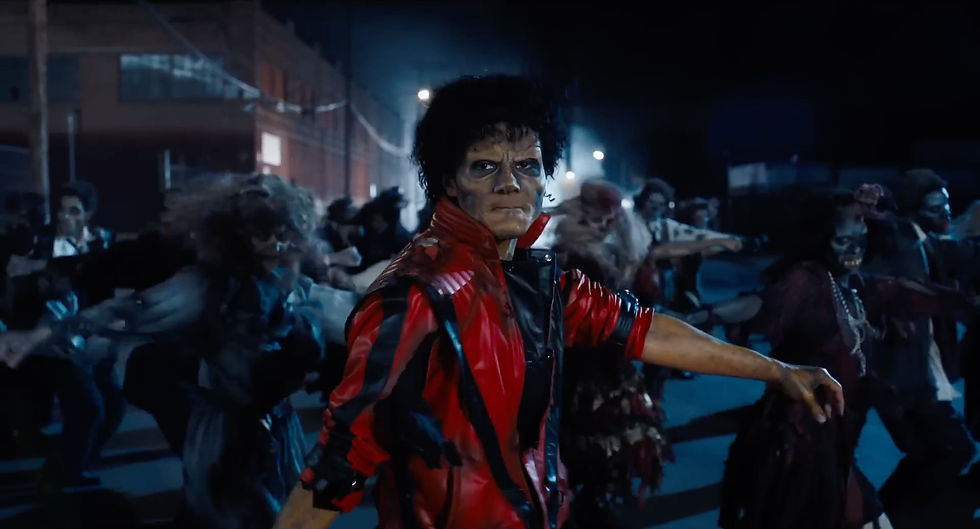
And finally, need we forget arguably the most legendary music video and song he’d ever created, ‘Thriller’? By that, I mean we’d see Jafaar Jackson engage with some other dancers as they all performed with Michael’s signature moves, like the Moonwalker. We’d even see Jafaar Jackson in the iconic zombie makeup and red jacket, as Michael Jackson donned in the music video, with some of the famous scenes from the music video recreated alongside them.
One part of the movie that I noticed was subject to complaints was that the animals in the movie, mainly Michael’s menagerie, were rendered in CGI, and not the convincing kind. The most noticeable of such elements surrounded Michael’s new pet chimpanzee, Bubbles, and when I first saw her, she looked adorable, especially when she played around with Michael in his room. However, I can understand everyone’s beef with the use of CGI for the animals, because whether we were spoiled by nostalgia or even by Grogu, it would probably have made more sense if the movie used actual animals to emulate the ones Michael took care of during his lifetime, especially Bubbles.
However, that doesn’t compare to the three problems I couldn’t help but notice from this film, and I want to take the opportunity to bring this up with you guys.
First, while this movie was clearly Michael Jackson’s movie, down to chronicling his time with the Jackson 5, let’s also not forget that Janet Jackson, who went on to become a famous musician in her own right, was Michael Jackson’s sister. Because they shared the same father, wouldn’t it have been a little more beneficial to have shown a nugget’s worth of involvement from Janet’s side of the story and display how she went about her business as far as what she, Michael, and their brothers shared in common were concerned? For the most part, the family dynamics involved Michael, his brothers, Joseph, and Katherine. You can even tell just how disconnected Michael was from his father when he called him by his regular name rather than with Katherine, whom he regularly called Mom. That made me wonder, did Janet address them the same way in the family? What did she think of Michael’s contributions to the family? What would Michael have thought of his sister’s contribution to the family? How those went down during Michael Jackson’s formative years, that would’ve been worth exploring throughout this movie.
Off-topic, but one cute moment with Michael was when he and fellow singer Siedah Garret were in the basement together, talking about Michael’s success and all the luxuries that Michael’s wealth could afford. And this was the scene where they had a pet python named Muscles for company. Little moments like that would’ve showcased what few genuine moments of warmth Michael relished when he wasn’t busy worrying about his father or where he stood in the music business.
Originally, I thought that was Janet, but it turned out not to be the case, for it was Janet’s idea not to partake in the film at all, which I thought was a huge shame. I can only imagine how much her mere contributions would add to Michael Jackson’s side of the story.
But the next aspect of this movie that also could’ve used some exploring was Joseph Jackson.
After looking at all the brutish and horrific ways in which he had Michael Jackson and his brothers perform their music on stage and rake in whatever money they could’ve made off of it, being the observant guy that I am, I looked at Joseph and wondered what he went through for him to have been this ruthless on his sons.

After doing a little research, it was just as I suspected.
When he was younger, Joseph Jackson had to deal with constant racism both at home in Gary, Indiana and where he worked at the nearest steel mills. I could tell that what he had dished out to Michael and his brothers was what he dealt with from other people on a regular basis. So, I thought at first that this was showing how he gave in to the hatred he tolerated more easily than Michael ever endured of his attitude. If anything, Joseph’s obtrusive behavior was what made Michael Jackson so resentful of his father, signifying how much he wanted to be nothing like him.
But it wasn’t just racism. It just so happened that Joseph and his family had to deal with perpetual poverty, too. And while it was bad enough that Joseph and his family had to deal with both racism and poverty, how about during the Great Depression?
That would’ve added fuel to the fires under which Joseph had to go by, and this made me understand, to an extent, why he was so harsh and relentlessly needy for money the way he was in the movie. But while it doesn’t excuse Joseph’s actions in the movie, not in the slightest, I still think the movie could’ve gone all out in dropping some noticeable, solid hints at Joseph’s background. That way, it would’ve lent more context to Joseph’s background, why he did and acted the way he did, and how desperate he was to have his sons bring in the dough for the family. He even boasted that he was responsible for founding the Jackson 5 and Michael Jackson’s success, and that whatever they did to make the money, he made it possible. But as he was in this film, he just felt too much like a thorn on Michael’s side, and a very sickening character with an unscrupulous method of pushing his sons into musical prosperity. Even at the end, when Michael Jackson announced during the Victory Tour in 1984 that it would be the Jackson 5’s last tour together before Michael Jackson would go off to do his own tours, especially after Joseph boasted about taking the Jackson 5 across the globe, I saw it as a suck-on-that moment for Joseph.
So, when all is said and done, I felt as turned off by the film’s lack of extensive context for Joseph’s character as I was by his prickly methods in the movie.
And the third aspect of the movie that just caught my attention – which regrettably, I’m beginning to agree with others on – is that it ignored the problematic parts of Michael Jackson’s earlier life that later fermented and painted him in a more unflattering light. Had that been given a little more focus, maybe we would have understood what happened in his life that would’ve resulted in the allegations leveled against him. Perhaps Michael was acting out of what he wanted out of the childhood he never had.

After all, how was he so drawn to the story of Peter Pan? And where else would he have gotten the inspiration to name his future settlement, Neverland, the same way Elvis Presley named his home Graceland?
However, because it didn’t pay too much attention to all that, it disregarded the more flawed parts of his life in favor of those that showed how he rose to become the superstar as we know him today.
Because Michael was originally filmed as a four-and-a-half-hour epic, it’s possible the filmmakers filmed some scenes from where the original last third of the movie would have been that would possibly demonstrate some parts of Michael Jackson’s life that would have grown into the allegations that shrouded him in the throes of controversy. Judging from how the movie got its start, perhaps they tried to film as much of Michael Jackson’s life as they could while also sidestepping any of the more sensitive parts of his life that would have triggered potential lawsuits.
However, unless the filmmakers took a cue from The Godfather Part II and It: Chapter Two and saved the scenes they shot for this film for the sequel, the ones that would’ve shown Michael Jackson’s earlier, questionable motives, then I don’t see what the filmmakers could provide in a more comprehensive, warts-and-all look into Michael Jackson’s life and inner demons. For that matter, maybe there might be more to Joseph Jackson that the first film did not show us, and maybe they’re saving that for the sequel as well.
But because the sticking points from the last half of Michael Jackson’s life caused all the filmmaking turmoil in the first place, there’s no telling exactly whether the sequel would salvage where this movie may have fumbled, or if it’ll play it too safe. Michael Jackson’s biographical exposure in film is far from finished, and it could use more exposure to the more flawed aspects of his life – not just his humane intentions – and also to his abusive childhood at the hands of Joseph Jackson. I think it’s high time for the filmmakers to take a risk with the sequel and go for it, no matter what others may say about it.
Until then, I’m gonna keep my fingers crossed for it to happen in the next film.
While the moments that seemed to veer from true, replicative success still stung in this film, the movie’s dedication to highlighting Michael Jackson’s rise to glory, in all his highs and lows, made for a fun time to be a Michael Jackson fan. Some of the story choices were inconsistent, but the majority of the acting was terrific, and Jafaar Jackson is just overdue for an honorable recognition for the seamless performance he gave as his late uncle. Getting back to what I mentioned earlier about the film’s production, the movie I’m looking over right now is technically meant to serve as Act I of Michael Jackson’s complete cinematic biographical history. There’s no telling how they would get the last half of Michael Jackson’s story off the ground, with Michael Jackson’s more rebellious antics and the accusations of sexual misconduct cropping up to pin him down. But as long as the filmmakers play their cards right, I’m confident they’ll turn out a hefty Act II of the movie that would live up to the movie’s closing line, ‘His story continues.’ Only time will tell.
For all of its fumbles, what mere mortal can resist the thrills of Michael’s life story?
My Rating
B

Works Cited
Blair, C. (2026, April 25). Is Jaafar Jackson really singing as Michael Jackson in the King of Pop’s biopic? People. https://people.com/is-jaafar-jackson-singing-in-michael-movie-11958218
Curry, G. E. (2009, August 19). Another Side of the Maligned Joe Jackson. The Bay State Banner. https://baystatebanner.com/2009/08/19/another-side-of-the-maligned-joe-jackson/
Frank, J. P. (2026, April 21). Not all the Jacksons wanted to be in Michael. Vulture. https://www.vulture.com/article/are-janet-randy-jackson-michael-biopic.html


Comments