

How to Train Your Dragon

Updated: Aug 16
Everyone has their favorite animated films, don’t they? Although animation had often been misperceived as only for kids or families, some animated films came to be regarded as prime innovators of cinema, though the recognition was usually for their technical merits. Look at what Walt Disney achieved during his lifetime and the major motion pictures he produced with his unique creativity.
Well, there were plenty of animated films that connect with us more deeply than we expect, and it could be for a variety of reasons. Could it be the gorgeous animation? The ingenious storytelling? The impeccable voice acting? It could be many things. I went on about movies like Aladdin, The Lion King, Ratatouille, Princess Mononoke, and so on, and how, because of what they achieved, those films became among my all-time favorite movies.
Well, it turns out that there have been some gems that struck my parents’ fancy as well. One was Up, which I think makes sense, considering how it centered around an elderly man’s quest to honor his late wife’s wish on his trip to Paradise Falls. Another film that spoke to them was Tangled, which, judging from the ongoing chemistry between Rapunzel and Flynn Rider, seemed to have struck a nerve with them as a couple.
The other one that struck their fancy, and mine as well, was the animated masterpiece from DreamWorks, How to Train Your Dragon.
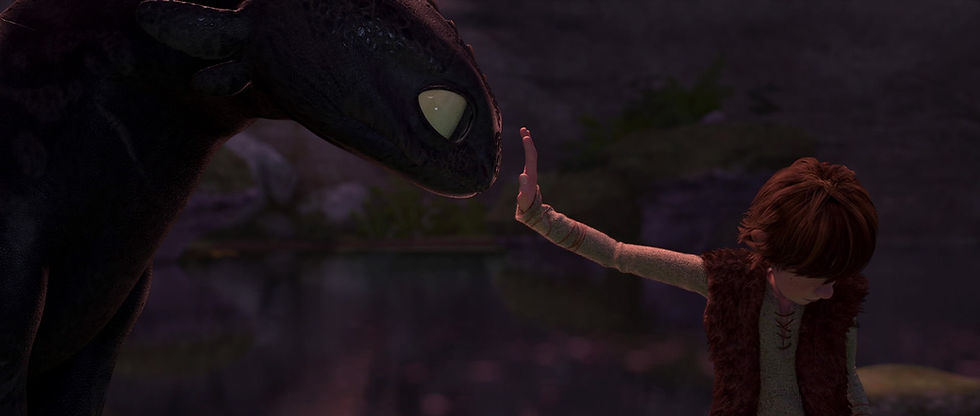
Based loosely on Cressida Cowell’s book series, this movie centers on a group of Vikings living in a shoreside village called Berk. The Vikings have settled there for seven generations and have grown as a tribe around one important task: hunting down and killing any nearby dragons. Much like us, they’ve always viewed the dragons as perpetual pests and dangers to society.
Only in this case, it’s not just one type of dragon.
Berk is plagued by many dragon species, but the Night Fury is the rarest, fiercest, and most feared. It strikes without warning and blends into the night sky, making it hard to find or catch.
During another dragon outbreak in their village, a young boy named Hiccup Horrendous Haddock III strove to prove himself as a worthy Viking by attempting to capture an invading dragon and pass it off as his trophy, something that would have designated his worthiness as a Viking-to-be. The only problem was that he was scrawny, a little socially awkward, and lacked the physical stamina usually expected of Vikings.
However, that night, a stroke of good luck had come his way when he attempted to use his inventions, which would have unleashed a net to capture a dragon with, and he would have used the invention to snag one of the dragons. He may not have seen it, but judging from the yelp and the nearby collision, that told him that yes, he successfully captured a dragon.
Later, when things had returned to normal in Berk, Hiccup tried to find where he had seen his target fall. And when he finally found his target, he was ecstatic but also horrified to discover that it was the Night Fury that he had successfully netted. The Night Fury was impossible to catch and detect and was feared for its immeasurable sense of stealth as a dragon, for it was swift and vicious when it came to catching its kill. Acknowledging just how severe this was and what would have happened if anyone knew what kind of dragon he caught, Hiccup decided not to blab to everyone in Berk about it, but rather keep tabs on the Night Fury he captured, especially since he could not have found it in his heart to kill it.
So, when he wasn’t busy doing dragon studies with his classmates, including his longtime crush, Astrid, he went back to the forest to meet up with the Night Fury and get to know that dragon more. In so doing, he discovered more and more about the dragon’s capabilities, what he liked, what he didn’t like, what he ate, how he flew, how he slept, how he did his own thing, and so on. And it turned out to be a hefty accomplishment, since the last time Hiccup looked in the Book of Dragons, which would have documented everything there was to know about all the dragon species, including those that invaded Berk, he discovered, to his surprise, that absolutely nothing was written about the Night Fury. The only thing said of it was that it was supposed to be avoided if one ever so much as encountered one. But in Hiccup’s case, he encountered it, he captured it, and he studied it. The more he did so, the more he realized that maybe hunting down dragons was not the best idea after all, for there may have been more to dragons, including those that invaded Berk, than met the eye.
What was Hiccup to do? What was to become of the potential friendship that began to develop between him and the Night Fury? And what if the word were to spread about Hiccup’s capture of the Night Fury? And how would his crush, Astrid, have responded to his capture?

When I first saw the trailer for this movie, I dismissed it as just another fun-looking adventure from DreamWorks, with the expected bouncy energy. Movies like Over the Hedge, Flushed Away, Bee Movie, and Monsters vs. Aliens all shared one thing in common: they were over-the-top animated movies that relished zingers and sly, subtle adult humor.
However, what I did not realize back then was that for every silly cartoony flick that DreamWorks had released in the late 2000s, DreamWorks had also, slowly but surely, released some unsuspected animated gems under its arsenal, including Kung Fu Panda.
And wouldn’t you know it? One of the next major animated gems to follow would have been How to Train Your Dragon. When this movie came out in 2010, everybody went wild over it, like it was genuinely one of the greatest modern animated movies that wasn’t from Disney or Pixar. I always wondered just why that would have been, but when I finally saw this movie with my family, I think it’s a given as to why it would have been such a charming, remarkable animated film.
Starting with its animation, its strongest highlight lay in the dragons’ distinct designs. I am familiar with the various interpretations of dragons, especially in Western and Eastern mythologies. But for what How to Train Your Dragon had going for it, its arsenal of dragons felt most unique and diverse. Besides the Night Fury, every one of the dragons carried a recognizable design and functionality. To list them all would be quite overwhelming, so here are the most memorable dragons from the movie.
First off, the Hideous Zippleback. This dragon was two-headed, and while one head could breathe gas, the other ignited a spark that would have turned the gas into fire, which was creative in and of itself. There’s also the Gronckle, which was basically a large, round dragon with small wings. That made the dragon species look like one of the more humorous dragons from such a lineup. There’s also the Deadly Nadder, which had spiky ends all over its body and was known to be pretty feisty. One of the strongest of the dragons, according to Hiccup, was the Monstrous Nightmare, which could have engulfed itself in fire as a defense mechanism.
And let’s not forget the quote-unquote ‘Queen Bee’, a titanic dragon called Red Death. While not ‘red’, per se, this dragon was just a beast because of its bulky body, razor-sharp teeth, and being around 20 stories high.
As for the Night Fury’s – excuse me, Toothless’ – design, I love how he was designed as a slick, sneaky, and easily inconspicuous dragon who would have blended into the night sky when no one would have suspected him. Outside of his sense of camouflage, what I also like about Toothless’ design was how he could be conveyed in multiple ways to highlight not only his friendship with Hiccup, but also the fact that, yes, he’s a dragon. One, there were times when he was fiercely protective, either of his claim or in self-defense. But other times, as Toothless got more comfortable with Hiccup, he began to show more of a cutesy side, which was more reminiscent of what you’d see in dogs, cats, almost any pets, really.
So, there were a lot of nice, distinct interpretations to evaluate of the dragons in this movie, especially since it’s based on a book series that revolved around figuring out the functionalities and aspects of each species of dragon.
However, it was interesting to see exactly how all the dragons tended to react similarly in terms of what tickled them, what they liked, or what would have repulsed them. Since dragons weren’t real anyway, there’s no telling what dragons would have been like or how they would have reacted to humans had they ever existed. But I found it engaging to pay attention to this movie’s sense of biology with the dragons, down to the multiple species it introduced, and then go from there about what would best suit the dragons’ personalities and biological standards.
Speaking of biological standards, the only part of the movie that seemed a little helter-skelter was the dragons snagging their kill for the Red Death. As Astrid herself put it, the dragons were like bees collecting pollen for their queen bee, and in this case, they simply dropped off their kill to their queen.
However, it would be a bit of a stretch to say that all the dragons were automatically compliant with the Red Death, even if Toothless’ instinctive natures as a dragon would have demonstrated as such. I ended up with the impression that perhaps the dragons might have been intimidated into servitude, knowing how one of the dragons that dropped off his offering to the queen dragon became lunch himself by that same dragon. So, there’s no telling exactly what would have made the dragons comply with the Red Death’s demands, whether it be out of fear of her or if they had an innate desire to follow their leader.
While their servitude as a species was a little confusing, it still raised the possibility that not all dragons were as menacing as they appeared.
And the Book of Dragons, which Hiccup read to study more about the dragons, was an interesting case about such studies. It displayed a one-sided, small-minded, and very paranoid look at how each dragon did their own thing. Many analyses of them said the same thing, which was that they were extremely dangerous and must be killed on sight, except for the Night Fury. As I demonstrated, nothing was written about that species, only that it was too stealthy and merciless to be even worth bothering with.
And that was one of the highlights of Hiccup’s gradual understanding and even continually growing friendship with the Night Fury, whom he eventually decided to name Toothless. Hiccup named him as such when he noticed him trying to smile, but showed no teeth, at first, only for the Night Fury to show how retractable they were.
It also introduced an intriguing psychological element: looking closely at dragons rather than fearing and killing them, much like what Hiccup did with the Night Fury. It’s obvious that Hiccup had more brains than brawn, but that also meant that it was in his nature to want to study the Night Fury more in terms of what he liked, what he disliked, how he slept, his hobbies, and things like that. And he was even innovative enough to have figured out how to make artificial limbs, if you will, for the dragon when one of its tail wings had been torn apart. And it was most advantageous to Hiccup and Toothless, not just because it helped Toothless fly again, but because, whenever Toothless flew with Hiccup on his back, it would also have made something along the lines of a steering wheel in terms of how to steer Toothless into whichever direction he wanted him to go. So, in a way, this movie invited viewers to embrace curiosity and the desire to learn more about dragons. Hence the title, How to Train Your Dragon.
It’s the equivalent of deciding to be a zoologist rather than a hunter.
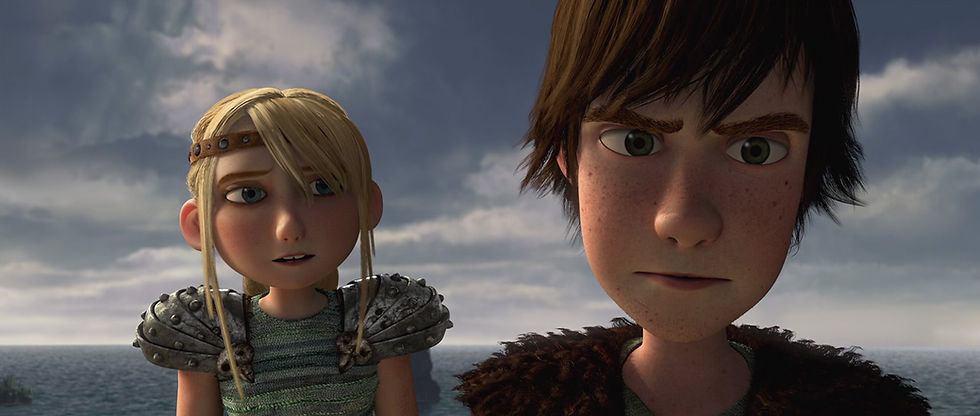
But that’s not all there is to report about what worked so well about this movie. Continuing the discussion about training dragons, the story was cleverly woven as well.
For example, it’s your everyday underdog story with Hiccup trying to prove himself as a worthy Viking, only to end up proving himself in different directions than he anticipated when he found the guts to study the dragons, especially a Night Fury, rather than hunt down and kill it, as the Vikings would’ve done with any dragon. So, because of that, when Hiccup grappled with the responsibilities he unloaded onto himself, as well as the traditional practices in hunting down dragons throughout his community, that’s when he began to wonder exactly whether he was cut out to be a Viking or even anything special because of what he had done differently from many ancestors’ worth of Vikings before him.
And it clearly caused a bit of a rift between him and his father, the Berkian leader Stoick the Vast.
Now, it’s obvious that Stoick meant business for a long time, and ended up hating the dragons’ guts like he had done him a personal harm. So, even though Hiccup was clearly trying to impress his father by proving his worth as a new Viking-to-be, and also to gain his father’s trust as a fellow Viking, the different methods he had discovered from his dragon studying did continually leave him at a crossroads and see where his allegiances truly lay and whether he was meant to prove his worth in either direction. What conflict would’ve come about because of this?
And that’s why, when the people he was the closest to in Berk caught wind of him studying the dragons and understood just what Hiccup studied of dragons like Toothless, what they’re capable of, and why they meant no harm, they too would have slowly caught on to the dragons and warmed up to them. Astrid was the first of such people, since she was the most suspicious of Hiccup’s intentions to sneak off from the rest of his class to be out and about and doing something else. Astrid, much like Hiccup, also wanted to prove herself as a worthy Viking, but had a fierceness to her that fueled her drive to prove her worth, especially when it was obvious that Hiccup was beginning to outsmart her, not because of his strength, but because of what he had accumulated of his knowledge of the dragons.
After all, knowledge is power, not muscles or weaponry.
So, there was already quite an intriguing hook as to whether new methods of practice clashing against old traditions would have caused any harmful ripple effects throughout Berk, starting with what Hiccup discovered of the Night Fury.
Yet, for all of the story’s potentially clichéd moments, How to Train Your Dragon would not have been as engaging as it was if it were not for the characters, all of whom were very distinct, charming, memorable, and would probably have gotten you hooked the very moment you lay eyes on them.
Hiccup was your everyday scrawny kid who had big dreams of proving his worth, but could not make it that far, the type of which we have seen plenty of times before. Sometimes, whatever he did was prone to make him a good, socially awkward comic relief, even in terms of his physical comedy. However, by the time he caught on to what he discovered of Toothless and what this species was capable of or what it could do, that’s when he discovered how he was meant for something else, something that would arguably be much more advantageous than simply hunting down dragons and killing them. So, when he began to embrace his gift and make it more well-known throughout Berk, that’s when it would have tested his drive to see what he was really cut out for, especially among a community of Vikings.
And I will say that there’s just something about watching Hiccup put together what he had accumulated either under Gobber the Belch’s apprenticeship or even as part of his studies with his classmates, also under Gobber’s hand, that really demonstrated how, if the Vikings exemplified the ‘brawn over brain’ mistake, Hiccup was easily ‘brains over brawn’. It was best shown by how he used his skills from Gobber’s teachings to make a makeshift tail wing for Toothless to help him fly more easily, not to mention how he applied all of the basic weaknesses to use against dragons in the hunt against them to apply it to the Red Death instead. That’s another reason why I respected Hiccup as a character.

His crush, Astrid Hofferson, was definitely something else. As I said, she also had the same aspirations as Hiccup, but her methods of achieving them were much more direct and fierce than what Hiccup would have done, for she would have relied on her speed, wits, and strength to hunt down any dragon she confronted. Of course, while she would have constantly tried to prove her worth to her fellow Berkian residents, there’s also a softness lying underneath that would have unveiled just who she really was when she wasn’t preoccupied with her drive to prove herself as a worthy Viking, especially when she was with Hiccup.
I will be frank: one of the most astonishing things about Astrid was her design. The way that her blonde hair was tucked over one of her eyes, combined with her graceful yet warrior-like stance – even for her age – and fierce determination to get the job done or teach other people a lesson, completely won me over.
Astrid was among those I think of when I think of girls who were very fierce and no-nonsense in their drive, but expressed a heart of gold from underneath their hard shell. I have a huge soft spot for characters like them, and Astrid easily fits the bill for me.
I’m also impressed with what was expressed about Astrid’s character, especially as far as Hiccup was concerned. There’s a sense that she was beginning to like Hiccup even before he broke every rule and started to intermingle with the dragons rather than hunt them down.
For example, when Hiccup successfully hit a dragon and was escorted back home for his troubles, I remember Astrid looking at him sideways, as if she was slightly concerned for him. That told me, without her even needing to say so, just how much she cared for Hiccup, even though it was obvious from the get-go that Hiccup had a bigger crush on Astrid than he thought Astrid would ever have had on him.
I love the attention to detail in animation, where you can appreciate the smoothness and elegance of the animation, as well as the small details in the foreground that would only cement your appreciation for this movie and its characters.
Stoick the Vast felt nobler than he seemed. As the leader of Berk, he would have given off the impression of a heroic but fierce and committed warrior who would have tried to keep Berk safe from the dragons and would have stopped at nothing until their enemies, starting with the dragons, were slain and kept harming anyone in his community.
But when it came to his relationship with his son, Hiccup, that’s when things started to take a more uncertain, almost awkward turn. As a father, I could tell that he tried to understand Hiccup, but could not find it in him to listen to him or to understand why he did things the way he did, as if he, too, saw him as a social misfit. However, it didn’t go so far as to paint him as a bad guy. Stoick clearly looked out for the welfare of his son, as well as his fellow community, but it’s only that his priorities and connections left him struggling to understand even the faintest glimpse of Hiccup and his priorities.
But what cemented his character was that he had his moments of awkwardness, too, which were pretty much on the same level as Hiccup’s. Among other things, that also told me that he was not entirely perfect or 100% evil. It’s those little aspects of his character that painted him in a more three-dimensional light, which, in turn, made him a more refreshingly complex father figure. As easy as it would be for people to view Stoick upon first viewing as an unpleasant father figure, those details and little quirks about him helped him come alive in more ways than one.
Gobber the Belch was a tour de force of a character. He would’ve looked, at first glance, like he would have been truly ruthless. But his demeanor made him a complete knockout, since he was a trustworthy authority figure who was studded with artificial limbs and had a mellow sense of humor.
One of the most notable aspects of his character was his relationship with Hiccup. Gobber always took Hiccup under his wing when Stoick, as Berk’s leader, was busy with other things for his village’s welfare. What’s more, I’ve always thought of Hiccup as being Gobbler’s apprentice in terms of being a swordsmith. However, Hiccup was more than just his apprentice. He was also one of his students, along with Snoutlout, Fishlegs, Ruffnut, Tuffnut, and Astrid. And as a close friend of Stoick the Vast, Gobber would also have tried to talk some sense into Stoick about whatever went on in Berk, especially Hiccup and his troubles. So, that made Gobber Hiccup’s de facto second father, his mentor, and his teacher, even if his lessons all concerned knowing how to hunt a dragon, down to knowing the dragon’s weaknesses.
There’s a sense that he was a highly respected Berkian and would even have tried to train Hiccup under the right circumstances and prep him to become a Viking of Berk, even if he, just like Stoick, did not believe that he had the capabilities necessary to pull off the job. I also found it very admirable just how much he was looking out for Hiccup when it wasn’t under Stoick’s guidance. When Hiccup was not busy putting up with Stoick’s shortsightedness or careless or dismissive nature towards Hiccup, he always looked towards Gobber for his more laid-back and commonsensical, if also goofy, outlook, especially since he and Stoick believed that Hiccup’s mother had died.
But that’ll wait until the next film.
The rest of the characters in the movie, primarily Hiccup and Astrid’s classmates, all felt memorable in their own distinct ways.

With Fishlegs Ingerman, there might not have been much to convey about him compared to arguably all the other students. But there’s something about how analytical he was, how quick he was to process the situation, and turn it to his advantage, while doing so in the most unlikely ways, that sets him apart from everyone else. For example, he solved complex mathematical equations to assess how to catch the dragons with their pants down. It added to the somewhat unusual nature of this character, and considering how, unlike almost everyone else, he actually read the Book of Dragons all the way through – seven times – I could tell that he was a bit of a bookworm, even compared to arguably many of the other Vikings. So this did give him a touch of uniqueness in his ability to defend himself against the dragons. Plus, Christopher Mintz-Plasse’s voice performance as this character helped emphasize Fishlegs’ more likable aspects, like he was the least obnoxious of Hiccup’s classmates.
At first, I didn’t think much about Snoutlout Jorgenson, the borderline bully who always wanted to be at the top of the student hierarchy. But his crush on Astrid highlighted his more boyish antics. It’s as if he did everything he could not only to make himself feel good, but also to impress Astrid, only to blow it every single time. Sometimes, he picked on Hiccup, but it was more or less out of boastful pride in his capabilities as a potential Viking-to-be and dragon hunter. But given his brutish nature, there’s something admirable about his attempting to be the best and win Astrid’s heart, even if he didn’t know the steps necessary to pull it off the right way.
Ruffnut and Tuffnut Thorston may not have had much said about them, but they felt like rapscallions in terms of their commitment to hunting down dragons and their willingness to boldly lunge into the action. Since they were twin brother and sister, though, what I remember them the most for was their constant bickering. Despite them sounding and talking tough, they’re both constantly at each other’s throats and always arguing about who should go first or how to do the job right. And Tuffnut definitely felt a bit like Snotlout, in that he was willing to face danger only to chicken out whenever he was in pain.
I know some of the characters may be a little like other characters we’ve seen before. With Hiccup, he gave off vibes of Arthur, or Wart, as we’ve seen him in The Sword and the Stone. Astrid, for her elegance, thoughtful nature, and aggressive personality, gave off vibes of characters like Misty from Pokémon and Colette from Ratatouille. And even Stoick the Vast seemed to give off vibes of King Triton from The Little Mermaid and Benson from Regular Show, who were very arrogant and overbearing but not bad people, and ultimately meant well. However, for what and who they stood for, what they meant to do with what they handled, what they meant to do with what was given to them, and just what they meant to other people, starting with those closest to them, there’s enough empathy and distinct human natures with these characters for us to identify with them right away. So they all worked just fine.
Let’s shift our attention to the voice acting. All the actors playing their roles in this movie helped breathe life into the characters and make them as distinct and memorable as they became.
Starting with Jay Baruchel as Hiccup, his nasally tones and socially awkward cues captured Hiccup’s likeness to a T. And when I heard him speak, I could tell that he had been a social outcast for most of his life. At least, when he was out being his socially awkward self and being at his clumsiest, it would have given off that vibe. But when he put his mind to what he knew he had to get right, that’s when there began to be an inner Viking wanting to break out somewhere and somehow prove the other Vikings wrong in terms of what should or should not have been acceptable customs as far as the dragons were concerned.
Gerard Butler gave off a most fierce but also respectable vibe as Stoick the Vast. I could tell that, for all his strength, nobility, and fearlessness, his vocal mannerisms sometimes hinted at Stock’s boastful nature, clouding his judgment, especially when it came to his son, Hiccup. He was very proud and boastful as the leader of the Berkians, but as a father, he sounded more sincere, honest, and yet frustrated. His tone suggested that he struggled to understand why Hiccup was the way he was and whether Hiccup was meant to be a Viking as he prepped him for battle, even if they never knew they were fighting the wrong enemy. Butler captured Stoick’s proud and haughty but still somewhat short-sighted instincts, since he wanted to do everything it took to make his people, even his son, proud.

America Ferrera fit Astrid like a glove, with her no-nonsense instincts and soft intonations. For all the moments when Astrid showed no signs of compromise and that she was all commitment and ‘take and no give’, Ferrera’s modest dispositions, like through Astrid’s conversations with Hiccup about why he did what he did or why she was driven to do what she thought was supposed to be done, helped make Astrid sound more well-meaning when it came to her understanding of other people and why they were driven to do what they meant to do. Maybe there was a part of her that perfectly captured the voice of someone who went from caring only about herself and being fierce about it, to maintaining that fierceness while also looking out for the needs of others. And that, besides her design and personality, was among the reasons why I was instantly drawn to Astrid, just like Hiccup was.
I’m a big fan of Craig Ferguson for what he conveyed of Gobber the Belch. I don’t know if he had a background in comedy, but it’s obvious that he’s a very witty conversationalist with a very unusual way of looking at things. And the sheer bandwidth with which he delivered his lines just made Gobber an absolute knockout and got a chuckle out of me sometimes. But whenever he was more serious or concerned, like with Hiccup, that’s when he let his more authoritative instincts take over and emphasize how much Gobber meant to Hiccup and even his classmates.
I was also fond of TJ Miller and Kristen Wiig as Ruffnut and Tuffnut. They both captured the simultaneous toughness apparent in each character, but also the childish tendencies that they indulged in whenever they were bickering or fighting each other over what’s what.
Of course, just like his character, Snoutlout, Jonah Hill didn’t have very much to help him stand out. But there’s still just a hint of aggression in his voice to help him stand out from the others, if not put him on the same level as everyone else. And when he tried to talk or act tough, it ironically revealed more of his insecurities. So, given what he had going for him, I still think he did a great job of making him more interesting than he might otherwise have been.
Speaking of which, I ought to shift my attention back to the animation, since that was clearly one of the most striking parts of the movie.
The animation was quite expansive, covering a wide range of regional touches to give us a taste of Viking history, from the shorelines to the Viking community, to the Viking design patterns, how they functioned as a group, and how they worked together to take down any of their foes, especially the dragons.
While not enough was conveyed about Berk as a society, its distinct features and Nordic details were enough to convince me that this was a small Viking village that would have lunged at any other adversary worthy of hunting down.
That was impressive, too, because whenever I thought of Vikings, I always thought of them as nomadic marauders who would have lunged into faraway lands to rob and plunder whatever they could have. So to see Vikings conveyed as sympathetically as possible was really a distinct take on Viking culture, even if I thought they might have been painted a little too sympathetically, given the Vikings’ generally notorious reputation.
Heck, even Astrid made clear that the Vikings eventually settled on this land and established Berk after sailing there. Who knows whether the ferocious Vikings we all know too well were their ancestors, or if they were among the more peaceful Viking groups in history? Anything’s possible in this world. For all I know, this movie didn’t dwell very much on the parental history of Snoutloud, Fishlegs, Ruffnut, Tuffnut, or Astrid. But even then, knowing what a small-knit community of Vikings the Berkians were, something tells me that perhaps they were busy getting other things all tidied up for Berk as well as in their crusade against the dragons.
There’s also something about the animation that helped separate this movie from the other DreamWorks movies. With some movies like Shrek and Kung Fu Panda, they’re all distinct, colorful, and bouncy. Here, while it wasn’t without some splashy colors, it’s mostly muted, grayish, and generally realistic. There were no comedic animal sidekicks, no bouncy imagery, or anything of that nature. It’s just a mostly grounded drama about a young Viking trying to prove his worth, only to stumble into earth-shattering discoveries and just what kind of ripple effect that would have had in the Viking society.
That made this feel like a big breath of fresh air among DreamWorks’ animated films. The only other movie with a similar muted color palette and atmosphere that I know of was Antz. But that may only have been because DreamWorks Animation was in its early stages before it finally found its voice and gave it a whirl with its overall visual identity. And even then, this movie, animation-wise, also carried some of the distinct animation styles popular in other DreamWorks Animation movies. So, it helped this movie continue what DreamWorks Animation did best while throwing something new and refreshing into the mix.
And I don’t feel like I need to go into the designs, since I already talked about some of the character designs, like some of Hiccup’s classmates, and especially Astrid. But I will say the movie did a terrific job of letting us know who was who by what they wore in their Viking attire. While the rest of the minor characters wore typical Viking attire, some others stood out to me more, and that was easy enough for me to know who was who. And because of the movie’s realistic nature, it helped lend a sense of believability to the moments when humans and dragons communicated, or even when Hiccup and Astrid discovered what the dragons did for the Red Death.
And that leads us to the movie’s most awe-inspiring element, the atmosphere.
Now, I have already gone on about how distinct this movie was from the others in its muted colors and more realistic designs. But when you look at the general atmosphere of Berk and its surrounding areas, anyone watching would feel immersed in the rich, traditional, and cultural landscape, as well as in how the residents of Berk functioned as a society.

And of course, the flying scenes, especially when Hiccup rode on Toothless, were just incredible. That’s when the general atmosphere, animation, and movements within the movie took on a whole other level thanks to Hiccup and Toothless’s sense of flight. And because this movie first came out in 3D in 2010, it would’ve helped leave the feeling that one was riding on Toothless’s back with Hiccup in the sky, throughout Berk, and throughout its valleys. Even in the moments where Hiccup perfected his moves with Toothless to dodge some columns, I could feel the agility and quick thinking on Hiccup’s part to steer himself and Toothless away from trouble. The results, every time the characters and their dragons flew together, nearly gave off the feeling of being on a roller coaster.
It was just an almost immersive experience, and the sheer majesty and beauty of all the flying scenes throughout the movie helped add to the general richness that the movie had to offer, particularly through the more subtle moments noticed in the movie, whether it’s between Hiccup and Toothless, Hiccup and Stoick, Hiccup and Astrid, and so on.
And one of the other most celebrated parts of the movie proved quite strong: the musical score by John Powell.
It helped capture the general whimsy and travesty of whatever the characters dealt with. If you were to listen to the music on its own, the distinct flair that Powell provided to the music would be enough for you to catch on to what was going on in the story without needing to see what’s going on or hear the characters say so.
Whenever it revolved around the Berkians fighting against the dragons, there was a very thrilling, anticipatory tone permeating throughout the music to heighten just how serious the dragon invasions were, as it did when the dragons fed their queen or when the Vikings confronted the queen after they found her. And whenever it’s more whimsical, the playfulness and overwhelmingly free-spirited nature became more apparent, especially when Hiccup finally mastered riding Toothless for the first time. I felt the genuine pride that Hiccup began to have in himself and in Toothless. It highlighted both the innocence of the younger people, who finally began to see the dragons as they were, and the pride felt in achieving what every other Viking thought was impossible, or rather unthinkable.
Of course, the crowning achievement in the music was the track entitled ‘Test Drive’. That track captured the culture, epic scope, compatibility, and wonders that permeated as Hiccup and Toothless began to respect and understand each other, and to put what they had studied about each other and their flight skills to the test. In a way, that musical piece alone would have been enough to sum up what How to Train Your Dragon was all about, down to where it occurred, when it occurred, and what was felt between the characters.
Long story short, everything about this movie was pure animated greatness. Everything that could have worked in How to Train Your Dragon was put on full display throughout this movie, with the most noticeable aspects lying in the visuals. And from there, it was just an eclectic, very wondrous trip into the depths of Viking history and just what a distinct sense of flair it threw in with its exploration of different dragon species, what each one was capable of, and whether they would all be as automatically harmful as we’d fear they’d be, as only Hiccup would have made known to us. The characters were all distinguished and charming. The animation was fabulous. The atmosphere was irresistible. The flight scenes were mesmerizing.
It was sheer luck that my parents and I discovered this movie when we did. When we saw it from beginning to end, we were instantly drawn into just how much of a technical marvel it was. Everything about it was sheer spectacle and majestic grandeur, from the more modest elements of the movie, such as Hiccup’s drive as well as his comprehension of the dragons, starting with Toothless, to the more epic notions concerning the Vikings and their drive to hunt down the dragons. It provided an ingenious balance of childlike wonder and adult sensibilities, which they carried into a spectacle that captured the best elements of both and delivered it in true northern fashion.
Fly on in and see what you’ve been missing.
My Rating
A low A+



Comments